Cheongju Craft Biennale, 2025
Cheongju, South Korea
The 2025 Cheongju Craft Biennale welcomes Thailand as the Guest Country, presenting the unique craft culture that has evolved alongside its history.
The theme “Living in an Elastic Time” reflects on time as perceived in Thailand and Southeast Asia—not linear or industrialized, but elastic, cyclical, and embedded in ritual, labor, and community.
In reimagining “Elastic Time” as a sustainable resource, the exhibition examines how recycled materials, natural resources, and inherited skills can shape the future of craft—connecting environmental responsibility with cultural continuity.
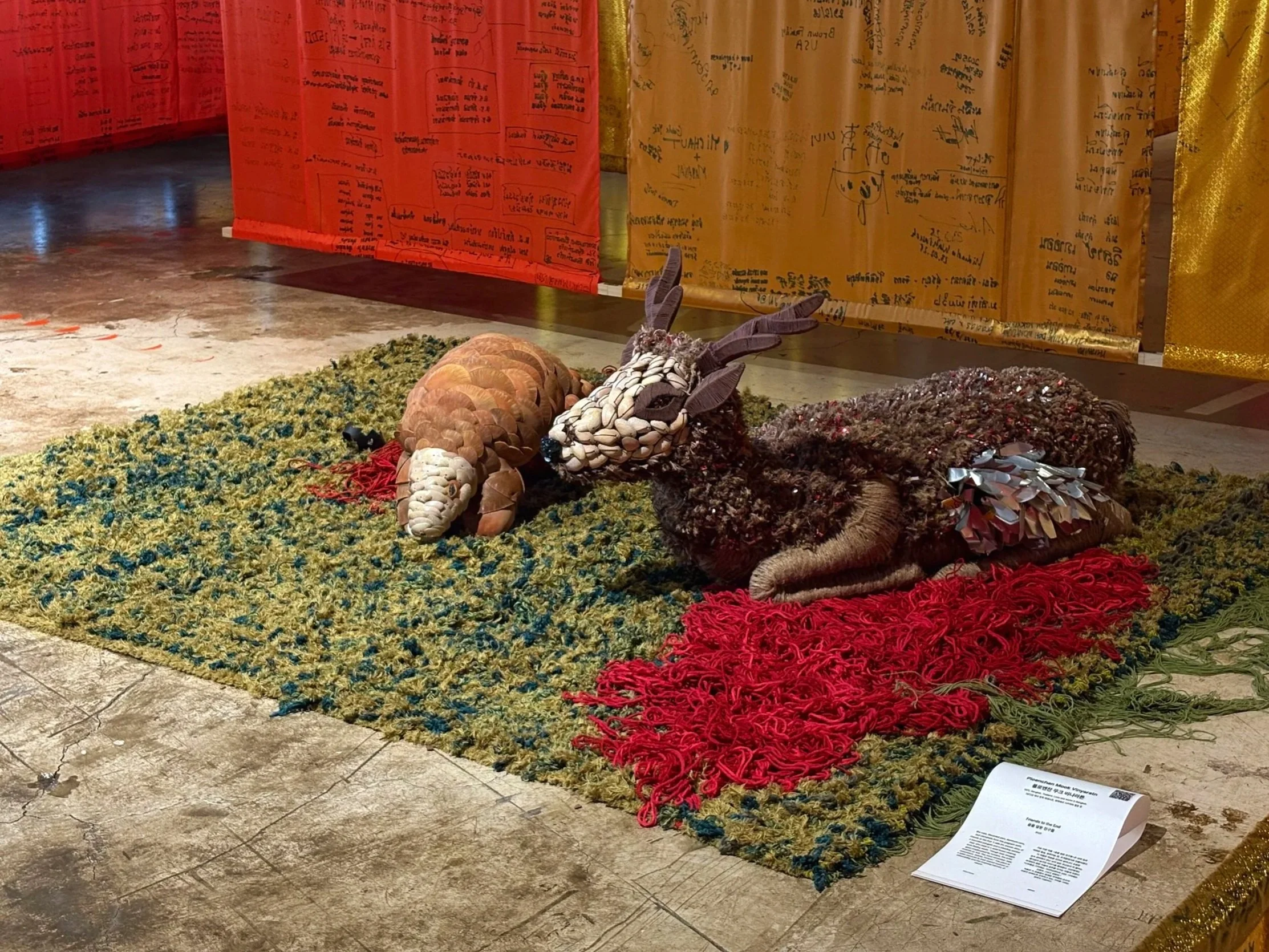
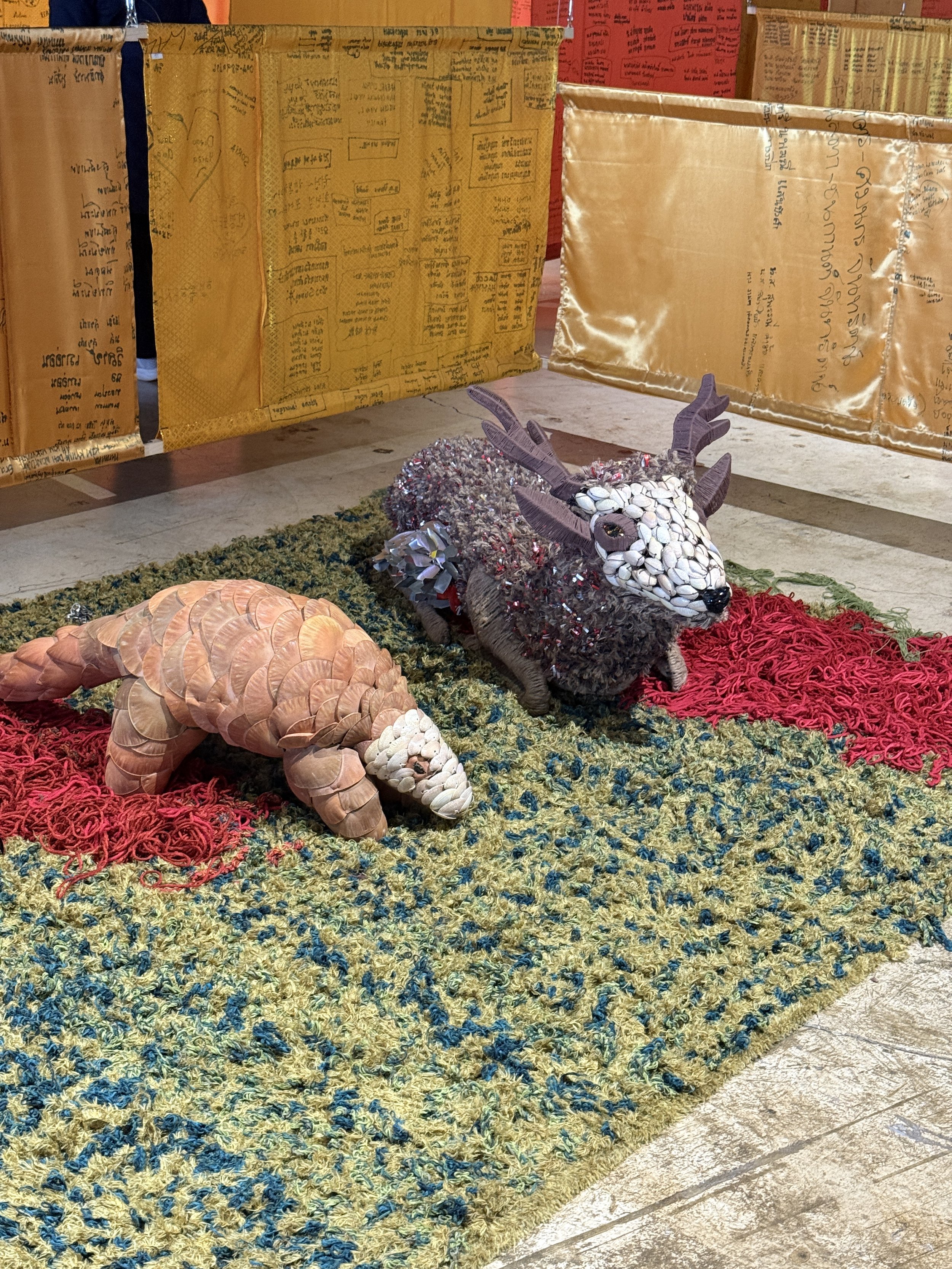
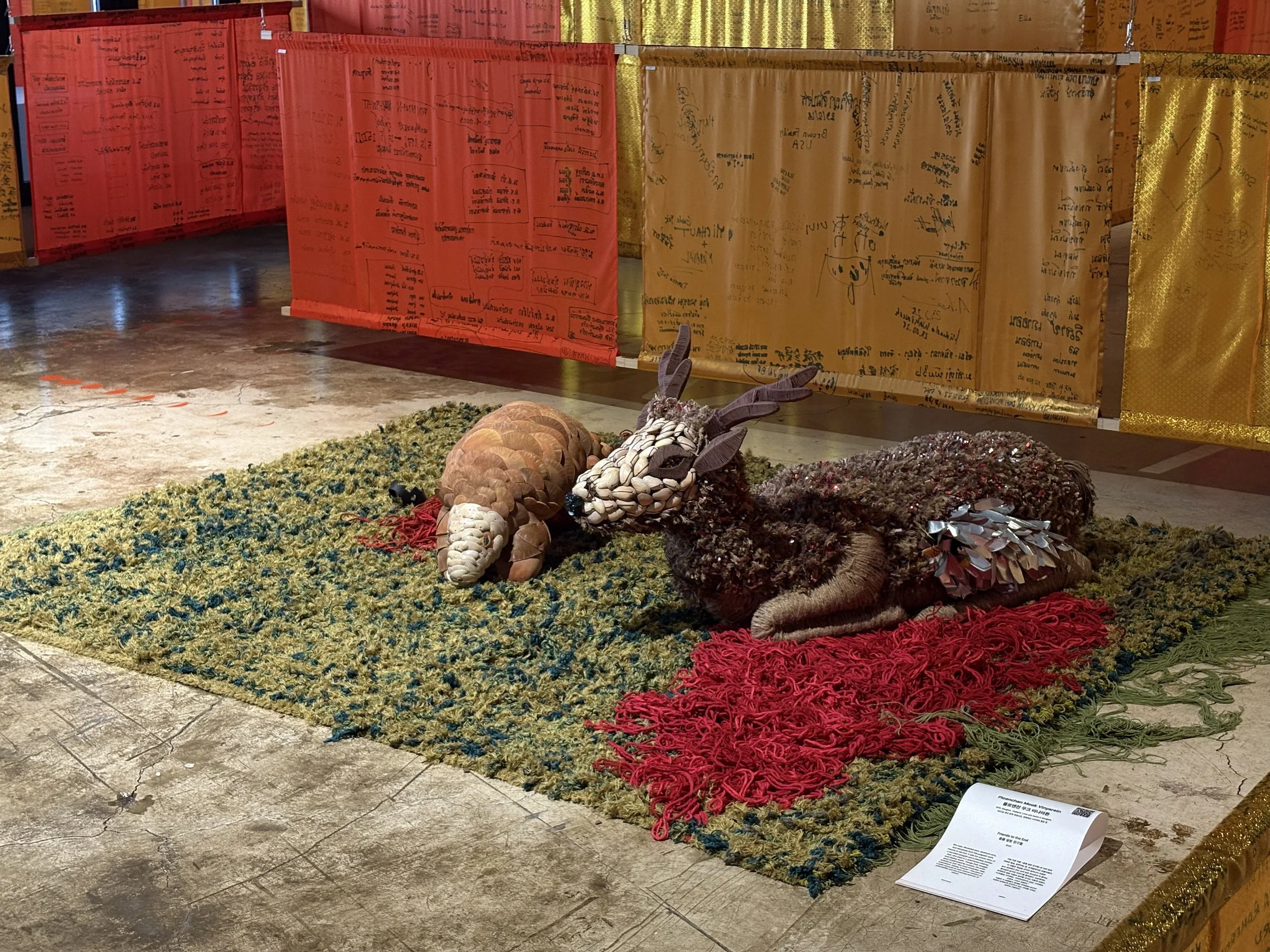
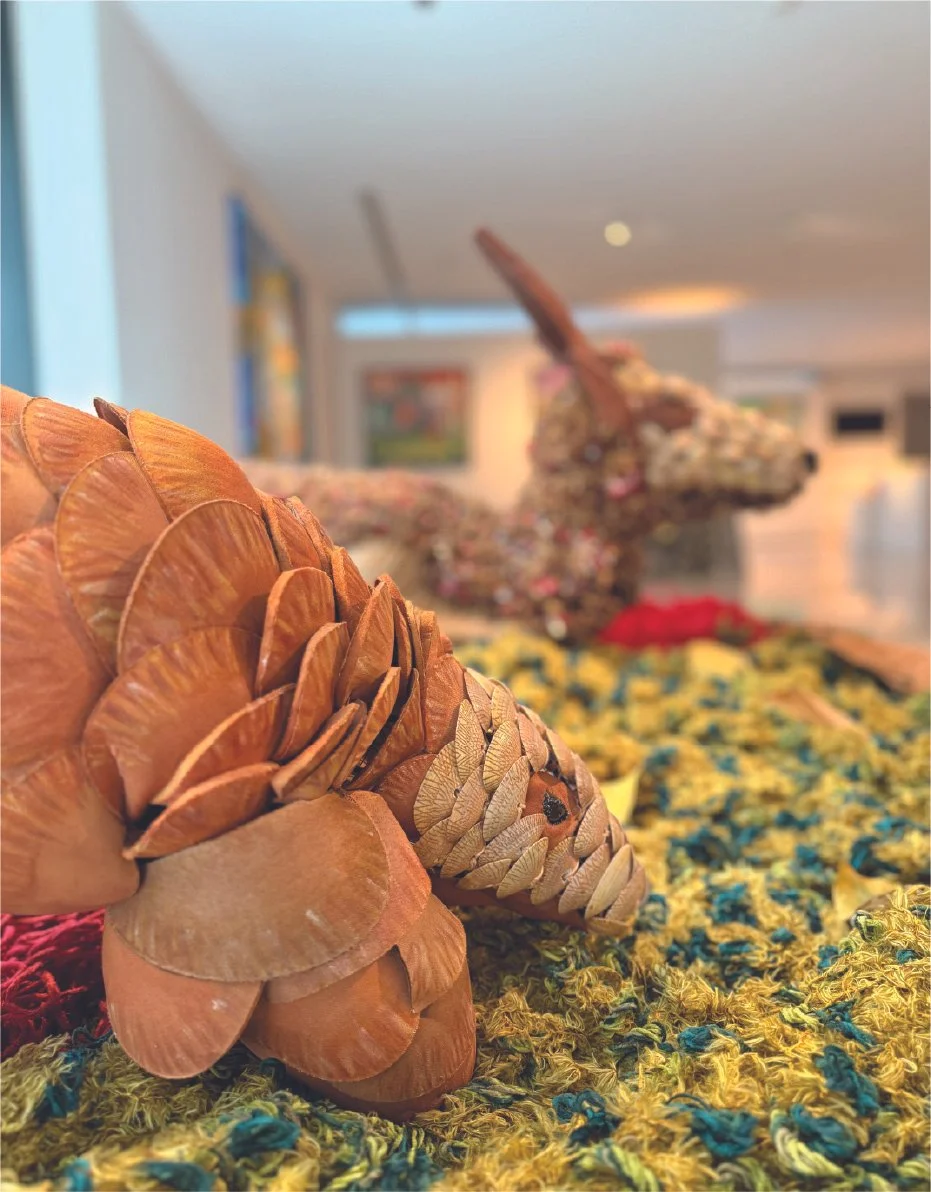
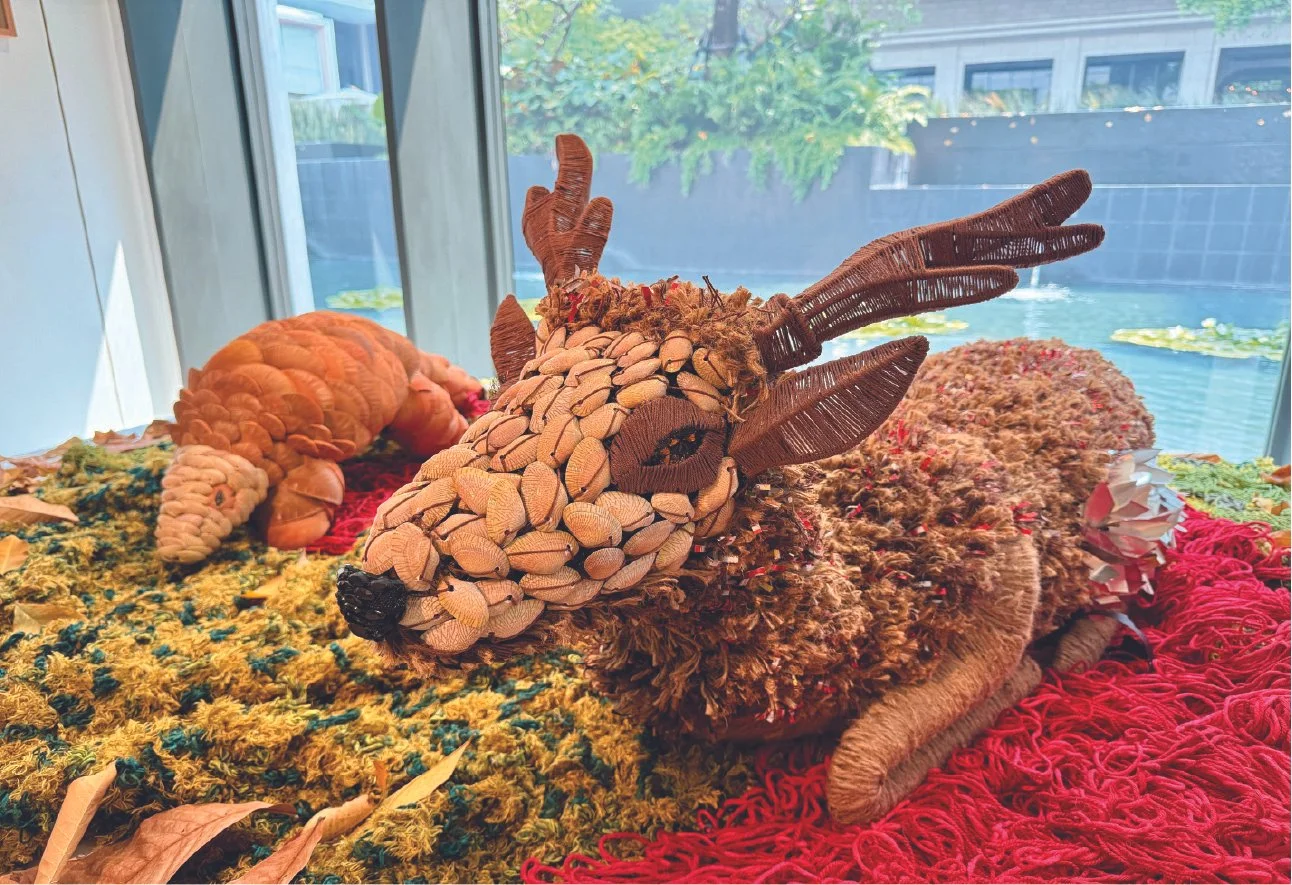
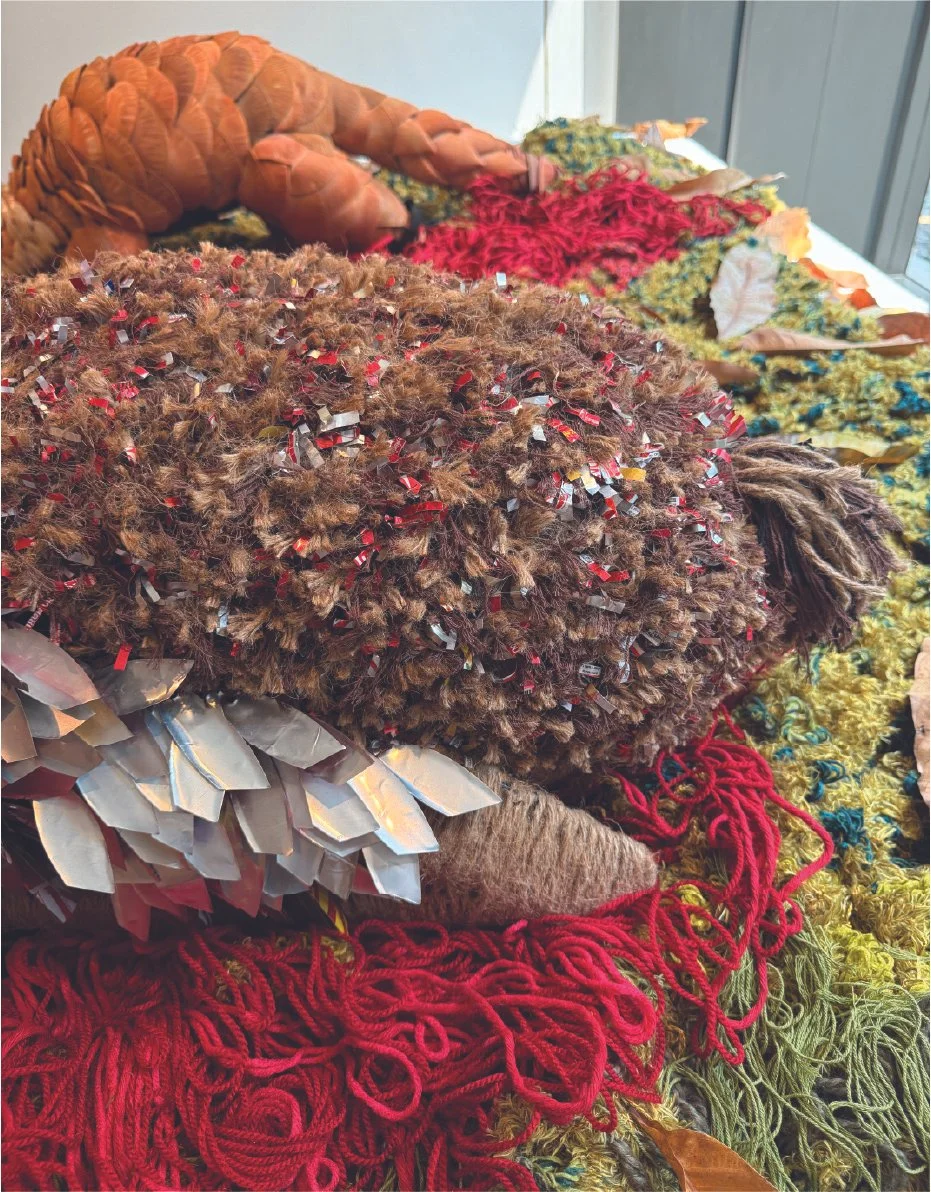
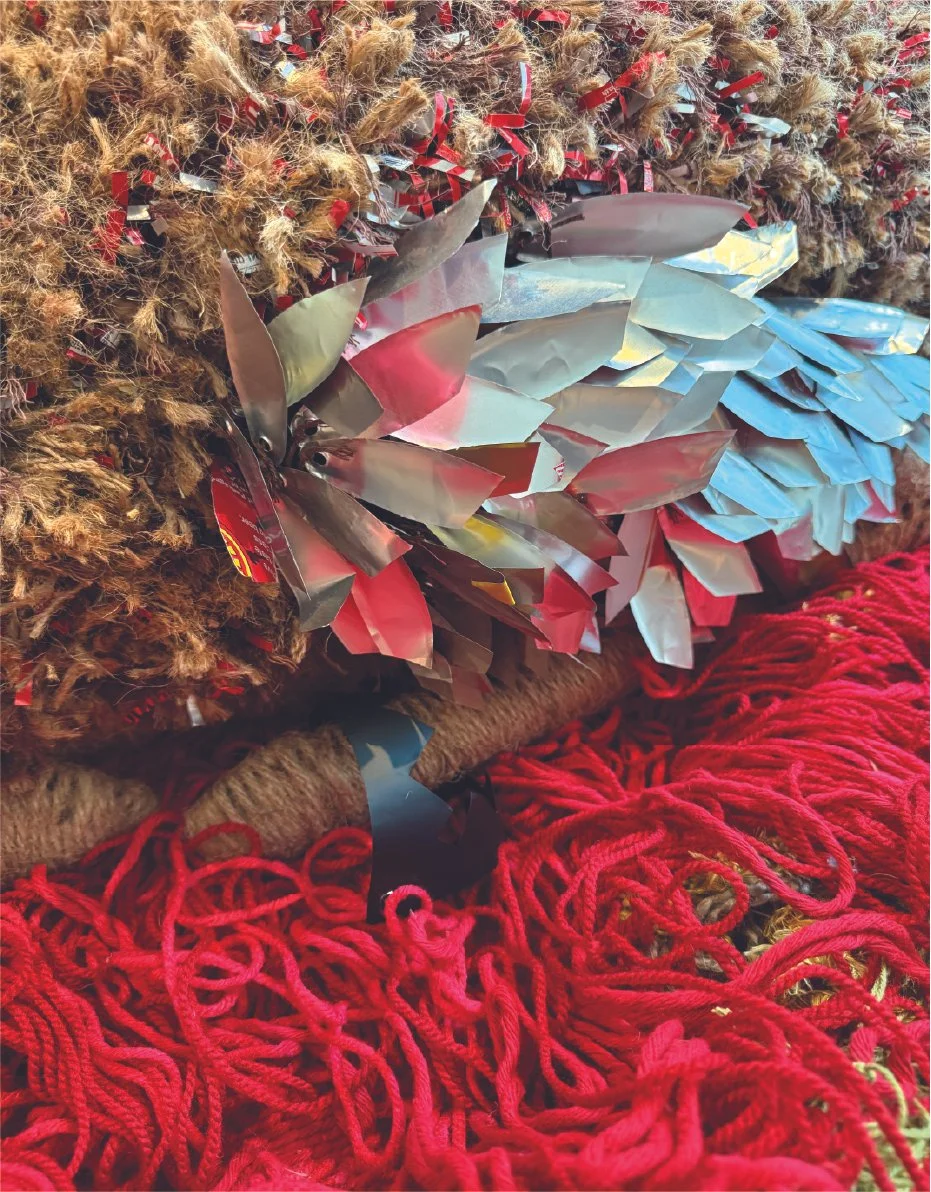
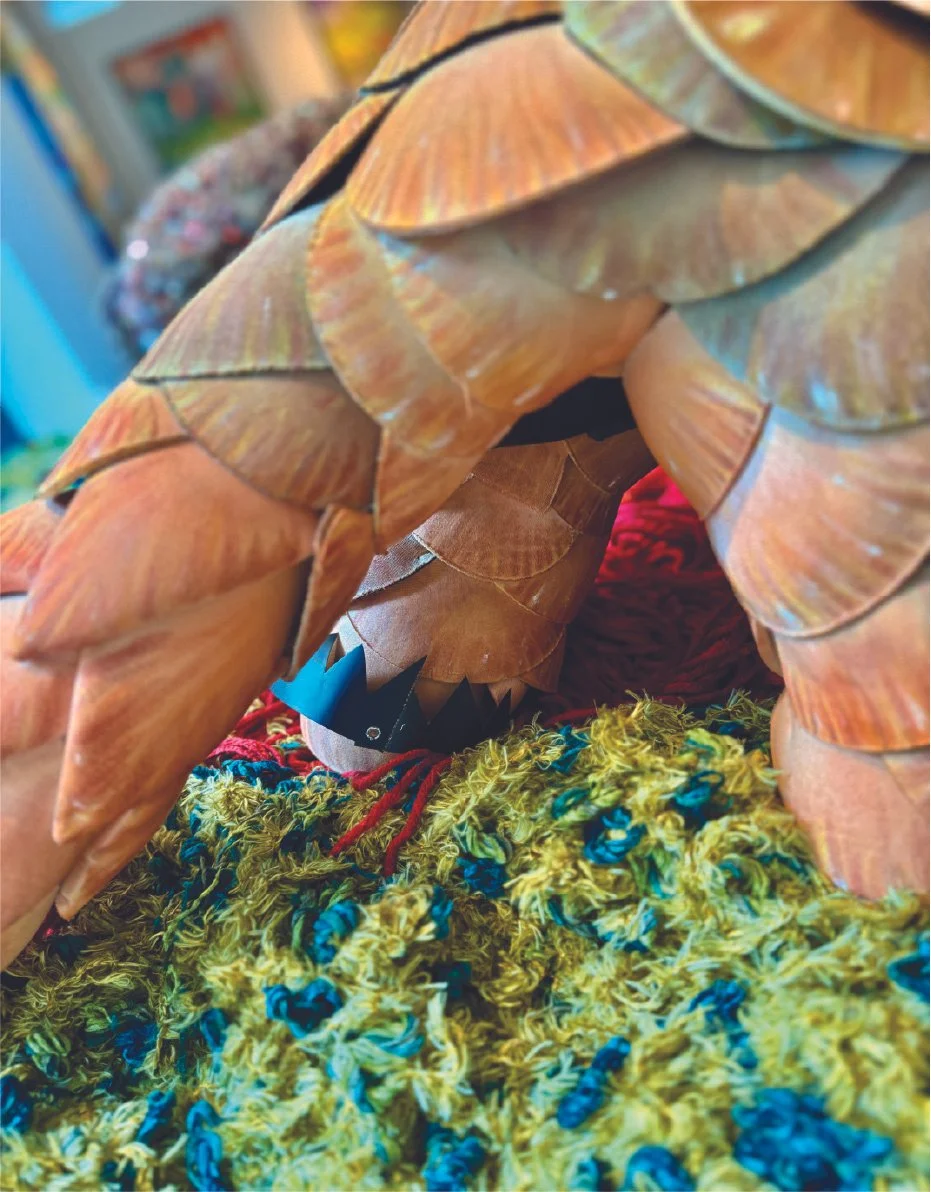
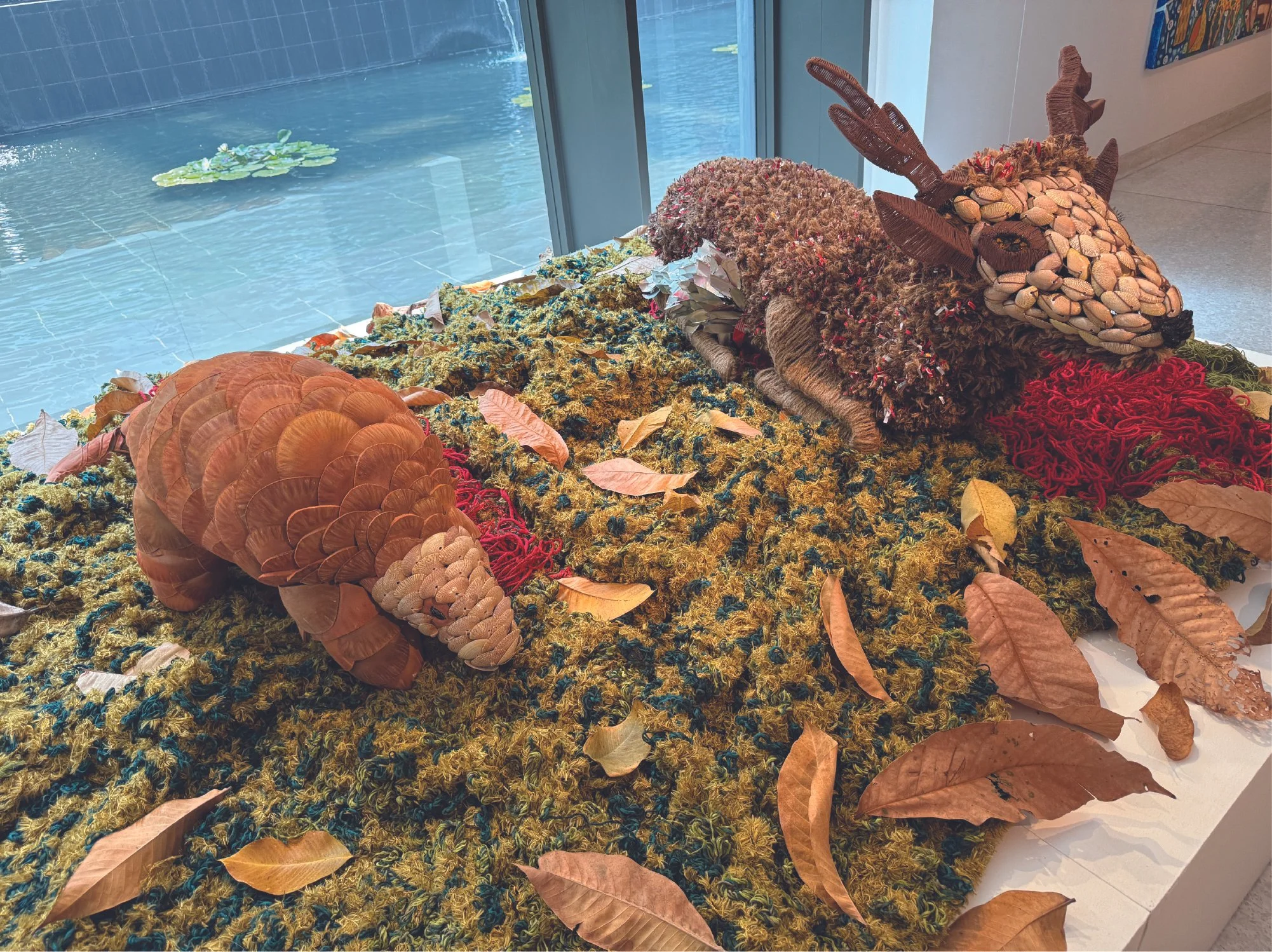
Fugitives-เพื่อนตาย, 2025
Technique : Mixed media
Size : W 200 cm x L 240 cm
A pangolin and a sambar deer pause in their desperate flight, momentarily united by shared peril. The shrinking expanse of the threatened Cardamom Forest, encroached upon by human activity, serves as a stark metaphor for their diminishing sanctuary. The "area rug" becomes a potent symbol of displacement—a confined, bloodstained space where survival hangs precariously in the balance.
Their companionship, born of necessity rather than choice, speaks to the fragile interconnectedness of species under threat. The work invites reflection on the boundaries we impose—physical, cartographic, and moral—and challenges us to confront the consequences of man’s relentless expansion into the natural wild.
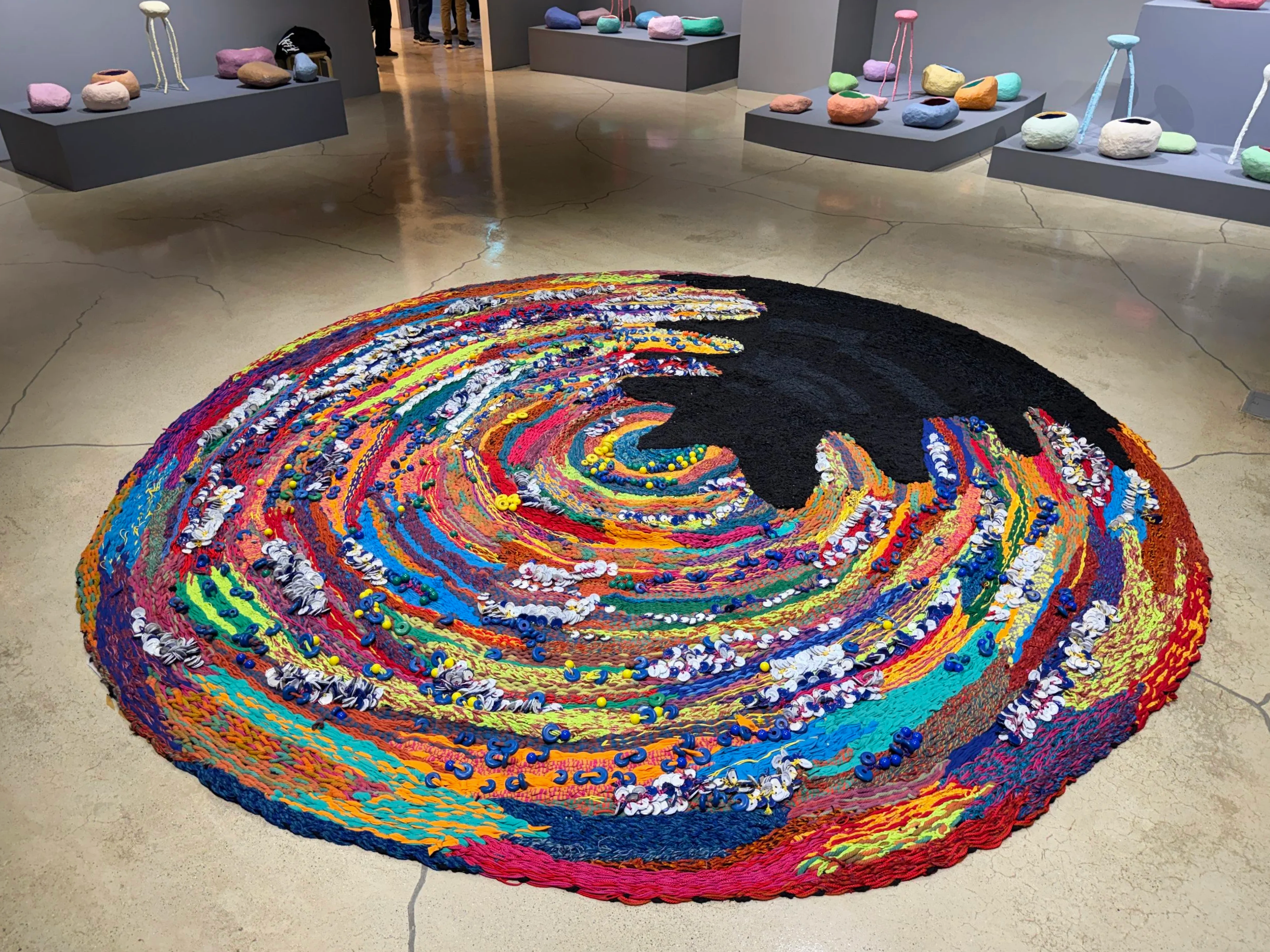
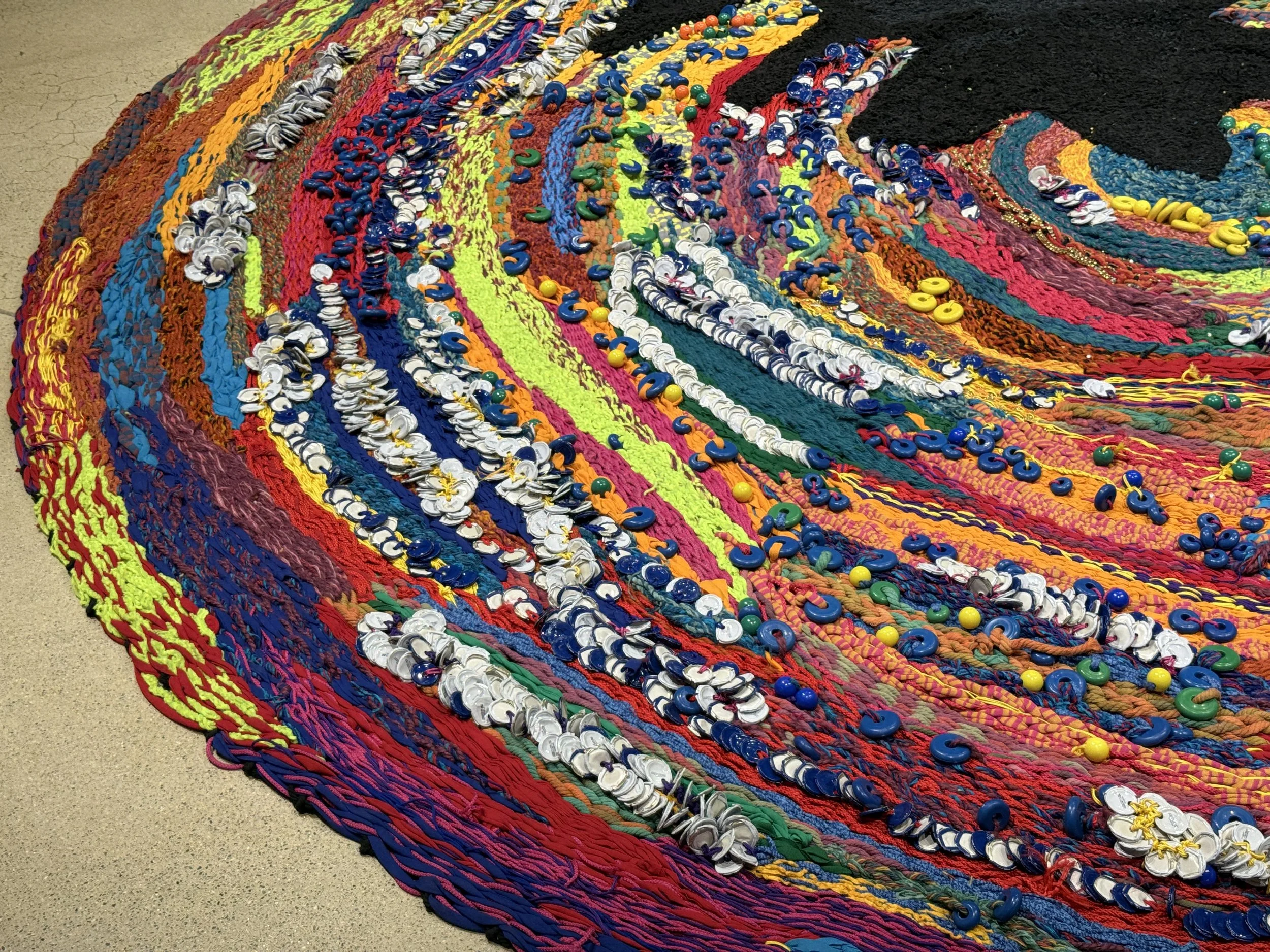
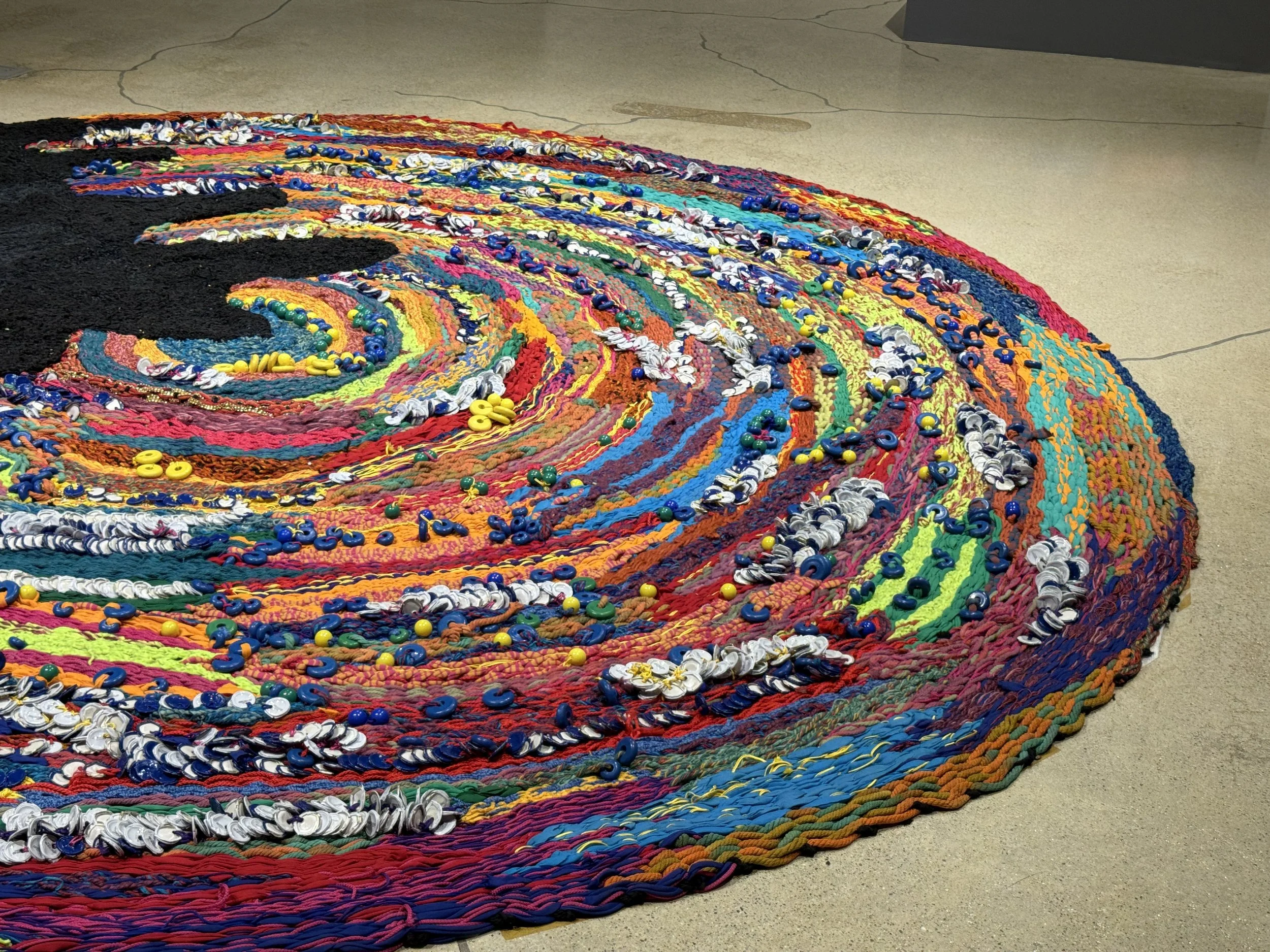
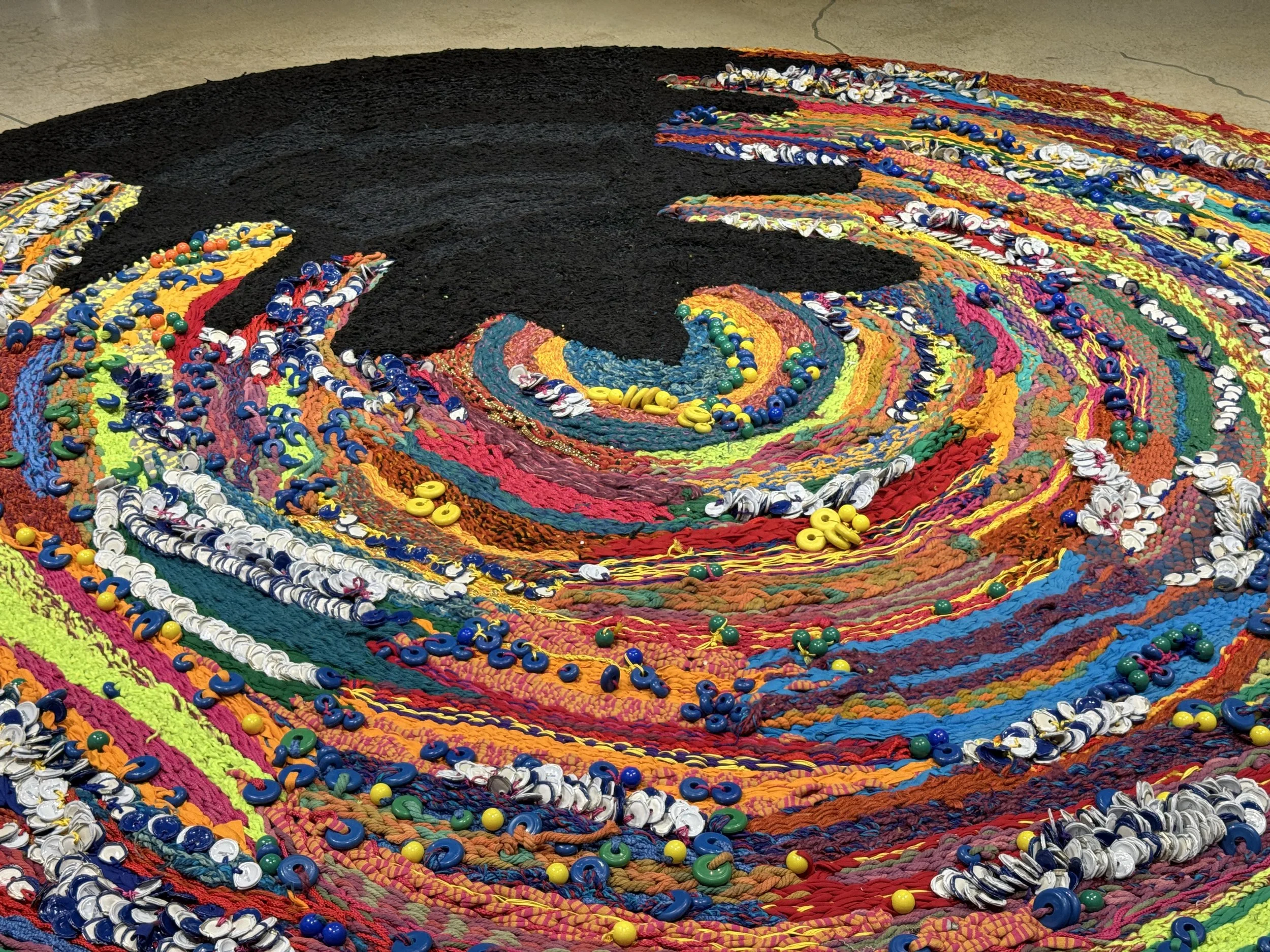
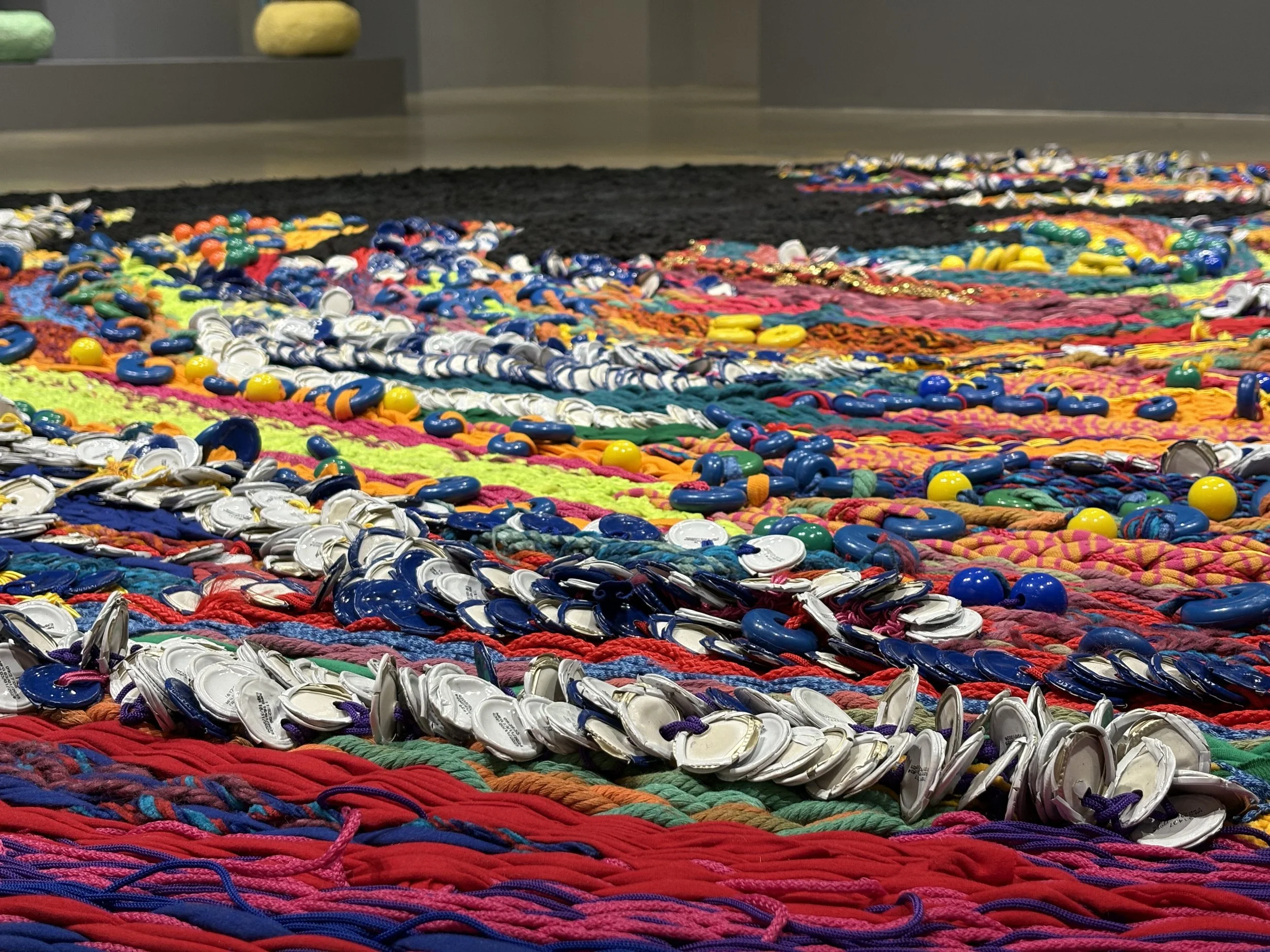
Afterfract, 2025
Technique: Handwoven mixed media
(discarded and leftover yarns, found beads, old ornaments, recycled aluminum bottle caps)
Dimensions: 300 cm in diameter
Selected for the Cheongju International Craft Biennale, Afterfract transforms personal rupture into universal visual language. Its title—a neologism fusing “artifact” and “after fracture”—casts the work as archaeological evidence of an ending. A floor-based installation centred on a deliberate void of black yarn shifts in scale depending on viewer perspective. Rather than promising repair, Afterfract confronts absence while transforming disputed yarn and recycled aluminium into a monumental contemplative form, exemplifying Mook’s practice of turning remnants into meaning.