Misfit
Solo Exhibition by Mook Ploenchan Vinyaratn
July 12 to October 13, 2024
at Four Seasons Hotel Bangkok
This exhibition invites viewers on a poignant journey of self-discovery and artistic rebellion. Crafted from upcycled Materials, not only challenge conventional artistic boundaries but also reflect Mook’s commitment to sustainability and environmental conciousness.
Each piece tells a story of resilience and defiance against societal norms, blending traditional craftsmanship with a contemporary flair that resonates deeply with cultural diversity.
Black sheep
Technique : Mixed media
Size : W 150 cm x H 150 cm

A lifelong feeling of not fitting in manifests in the deeply disruptive dark element winding through the middle of a field of white yarn hand-spun from A4 office paper—a material Mook developed and used to great effect in her 2020 solo exhibition The Sea Ghost and Beyond.
The stark contrast between the dark chasm and the surrounding white fibres symbolises a feeling of isolation amidst societal pressures to conform. Through the intricate weaving and layering, Mook illustrates the tension and struggle of existing in a culture and society without feeling a sense of belonging.
Black Sheep is not only a personal re action but also a broader commentary on the beauty norms that pervade society. By reclaiming and highlighting dark tones as the central element of this artwork, Mook challenges these norms and asserts her inherent strength. This piece invites viewers to reconsider their own perceptions of beauty and to appreciate the richness that comes from embracing all shades.
Off Why?
Technique : Mixed media
Size : W 150 cm x H 150 cm
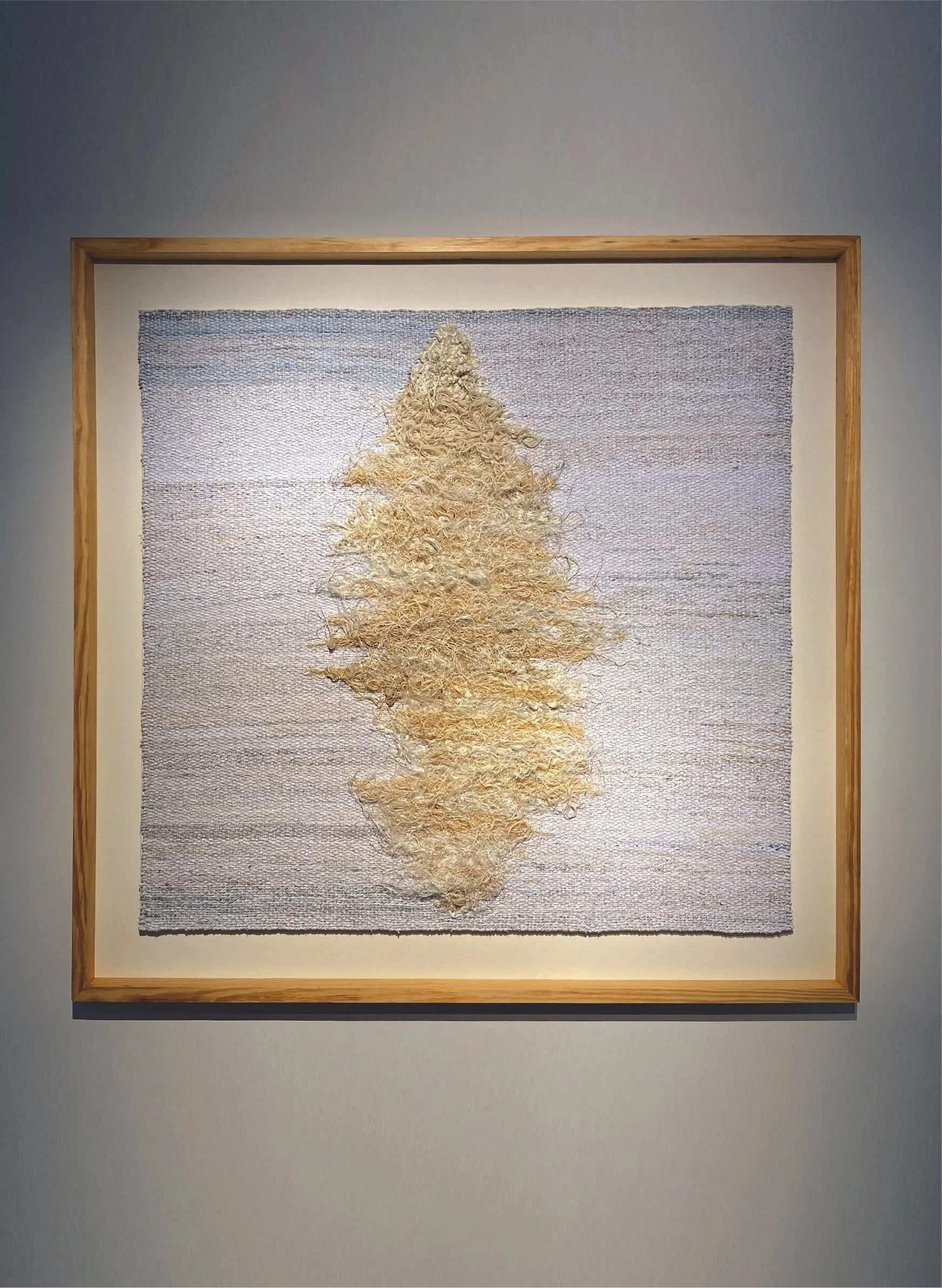
A sibling piece to Black Sheep, Off Why? is a compelling exploration of identity, conformity, and what it means to be a misfit. Featuring a central element of white in a shade that subtly diverges from its surroundings, this intentional variation prompts viewers to contemplate the nuances of fitting in and the significant differences that define individuality
Here, Mook questions accepted standards and celebrates distinction through her vision, not for its own sake. The colour deviation becomes a trigger for asking broader questions of belonging and identity, as the central motif, though ostensibly white, is different from its surroundings, inviting deeper re action on the idea of "why?"
Why do we strive to fit in? Why is difference so often marginalised? Why do I like (or not like) this?
This piece encourages viewers to embrace the variations that make each of us unique and stands as a testament to the beauty of subtle divergence and the power of individuality within the collective. It challenges viewers to recognise and appreciate the delicate differences that contribute to a richer, more diverse tapestry of human experience, underscoring the idea of being a “misfit” by highlighting how small variations can create profound impacts.
Transmission
Technique : Mixed media
Size : W 127 cm x H 125 cm
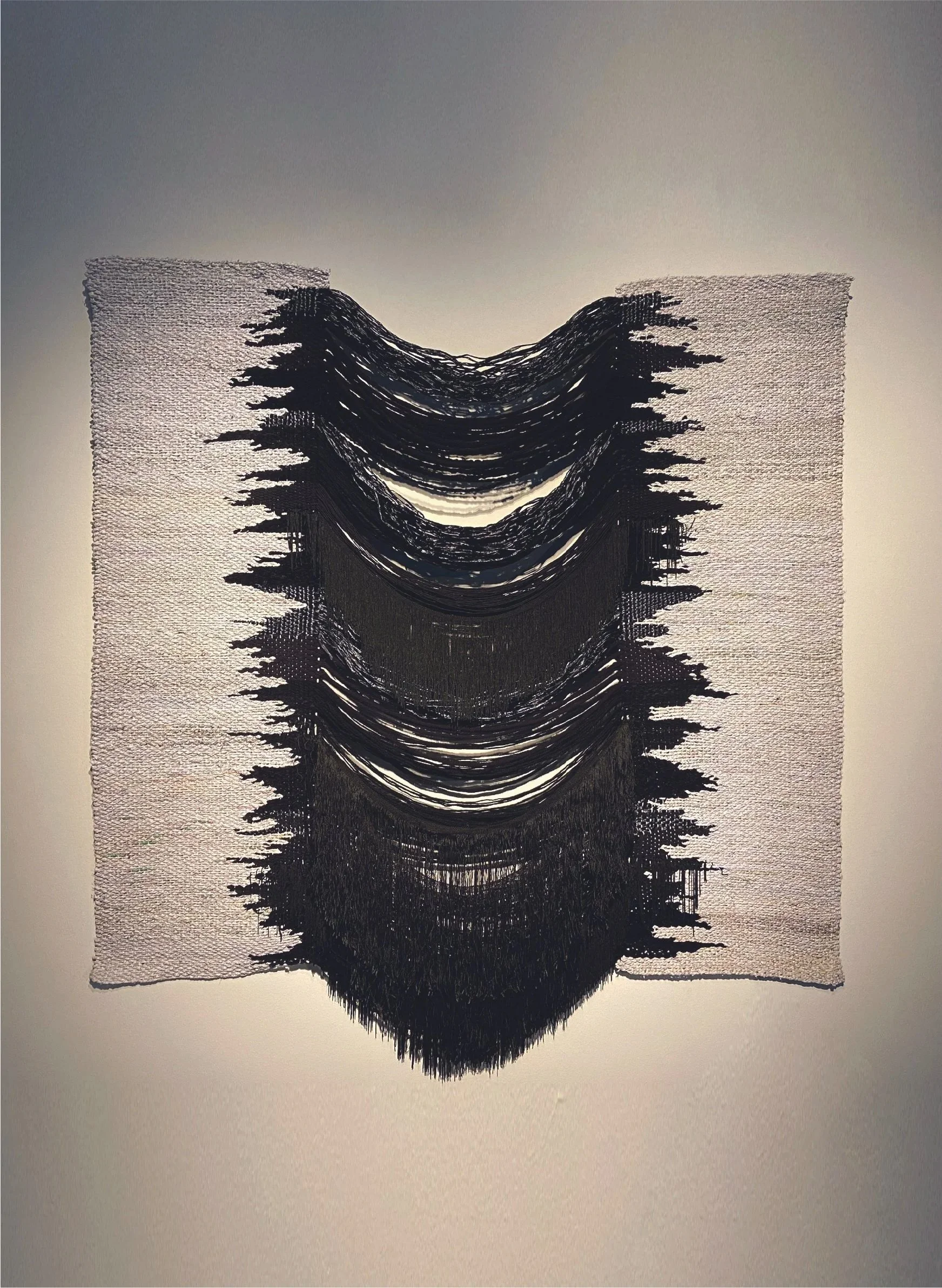
Transmission diverges from Mook's typically vibrant palette, embracing a monochromatic scheme that underscores the often-overlooked processes underpinning creative endeavours. Through meticulous craftsmanship, Mook transforms mundane materials into a striking visual narrative, celebrating the unseen yet vital pathways of communication and energy transmission.
Intricately woven from repurposed office papers, Transmission captures the essence of information and energy flow. The hand-spun paper yarn re flects a commitment to sustainable materials, while the central motif, a dense black tangle, evokes the ubiquitous power lines and telephone wires that lace the streets of Bangkok. This chaotic web of connections, despite its disorder, somehow effectively facilitates communication and energy distribution in our urban landscape.
Through this piece, Mook serves as a conduit for diverse ideas, demonstrating that creativity extends beyond vibrant hues and expressive forms. This artwork invites viewers to recognise the beauty in the everyday and appreciate the patience and determination required to weave together the threads of modern work and life. It re flects on how we connect, communicate, and share energy—both literally and figuratively—highlighting the intricate balance between function and creativity in our daily interactions.
Queen’s Gate
Technique : Mixed media
Size : W 150 cm x H 150 cm
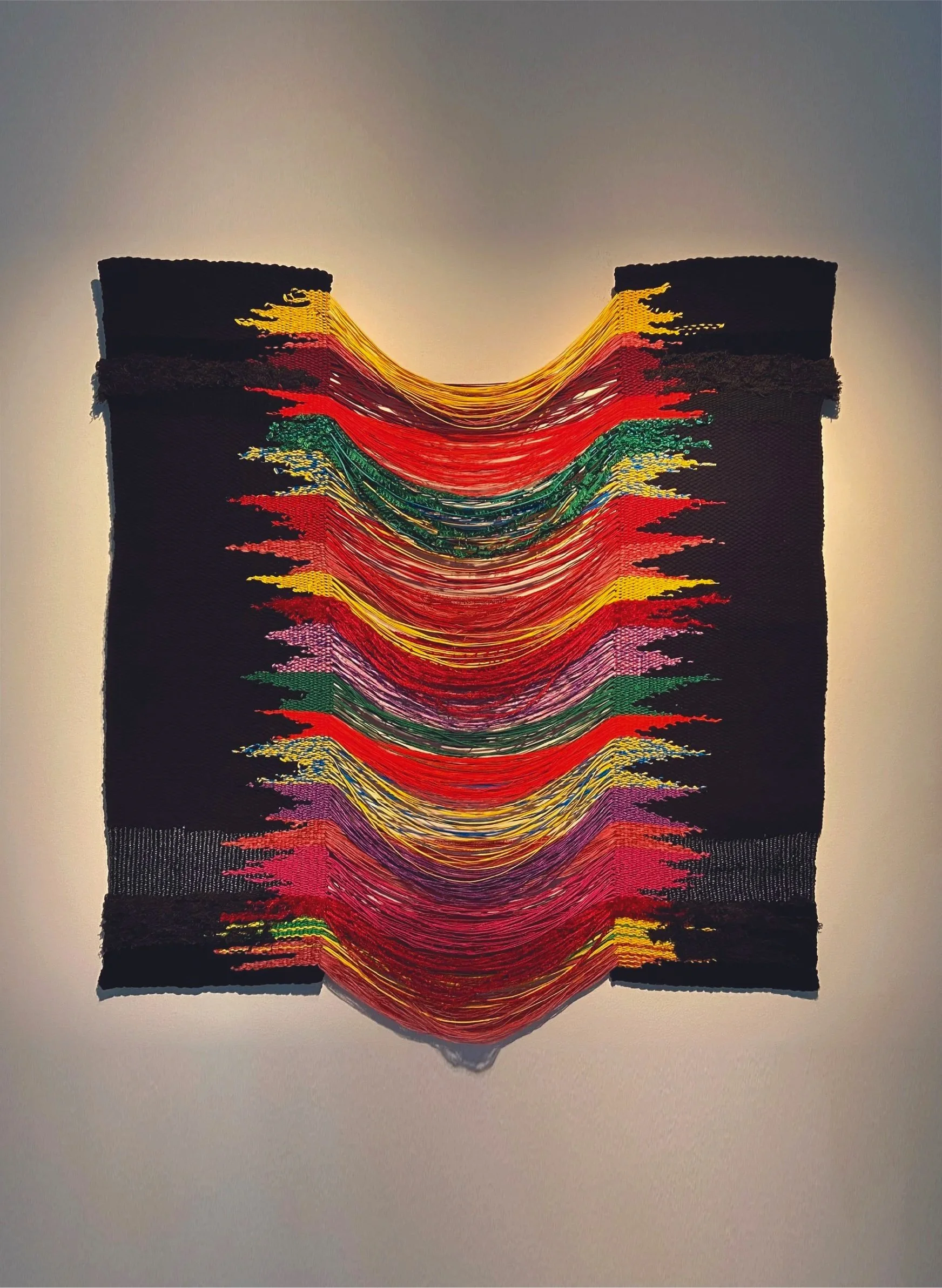
Queen's Gate bursts with the vibrant hues and dynamic energy characteristic of Mook's oeuvre, encapsulating the artist's transformative experience while studying at Central St Martins. This piece is a celebration of an environment where she started feeling boundless creativity, a testament to the thriving artistic spirit that found its wings during Mook's time in London.
Creating this piece evoked a sense of exuberance and freedom for Mook. Through this work, she invites viewers to share the exhilarating rush of ideas and inspirations that define an artist's journey. Queen's Gate is more than a re action of a specific time and place; it is a portal to the boundless possibilities that open when creativity is given the space to fl ourish. The piece resonates with a breathless energy, each coloured thread symbolising possibilities, which together embody a burgeoning spectrum of potential that lies within every artist when they are free to create without constraints.
Under the Bridge
Technique : Mixed media
Size : W 300 cm x H 120 cm
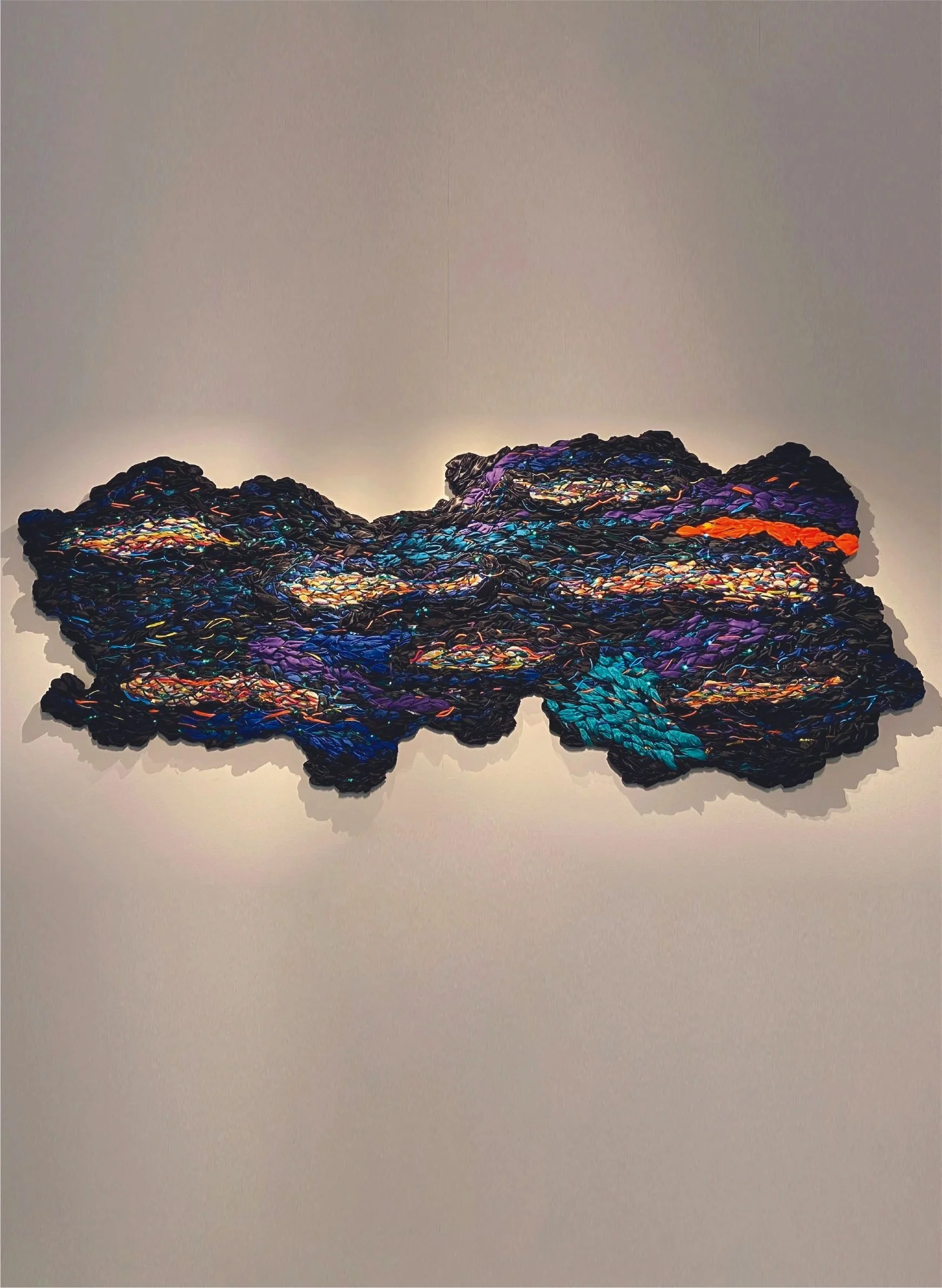
Under the Bridge captures the mesmerising essence of coloured lights dancing on the waters of the Chao Phraya River. This piece was inspired by a serendipitous boat trip, where Mook and her husband joined an old friend for a spontaneous afternoon of relaxation on his river boat. Amid the pressure of looming commercial project deadlines, this unexpected journey offered Mook a much-needed respite and a chance to reconnect with the beauty of the river and its peaceful surroundings.
As their boat drifted beneath the Maha Chesadabodindranusorn Bridge, the play of coloured lights against the water's surface created a magical spectacle, which Mook sought to encapsulate in this artwork. Using leftover fabrics, yarns, and dyed stockings, she sought to recreate the shimmering interplay of light and colours, in a moment of peace and rejuvenation amidst life's pressures.
This work not only highlights Mook's ever-evolving technical prowess in mixed media but also her penchant for transforming personal experiences into evocative artistic expressions. Under the Bridge stands as a testament to the healing power of nature and relationships, and the importance of taking time to find beauty and tranquility in unexpected moments.
Replication
Technique : Mixed media
Size : W 165 cm x H 120 cm
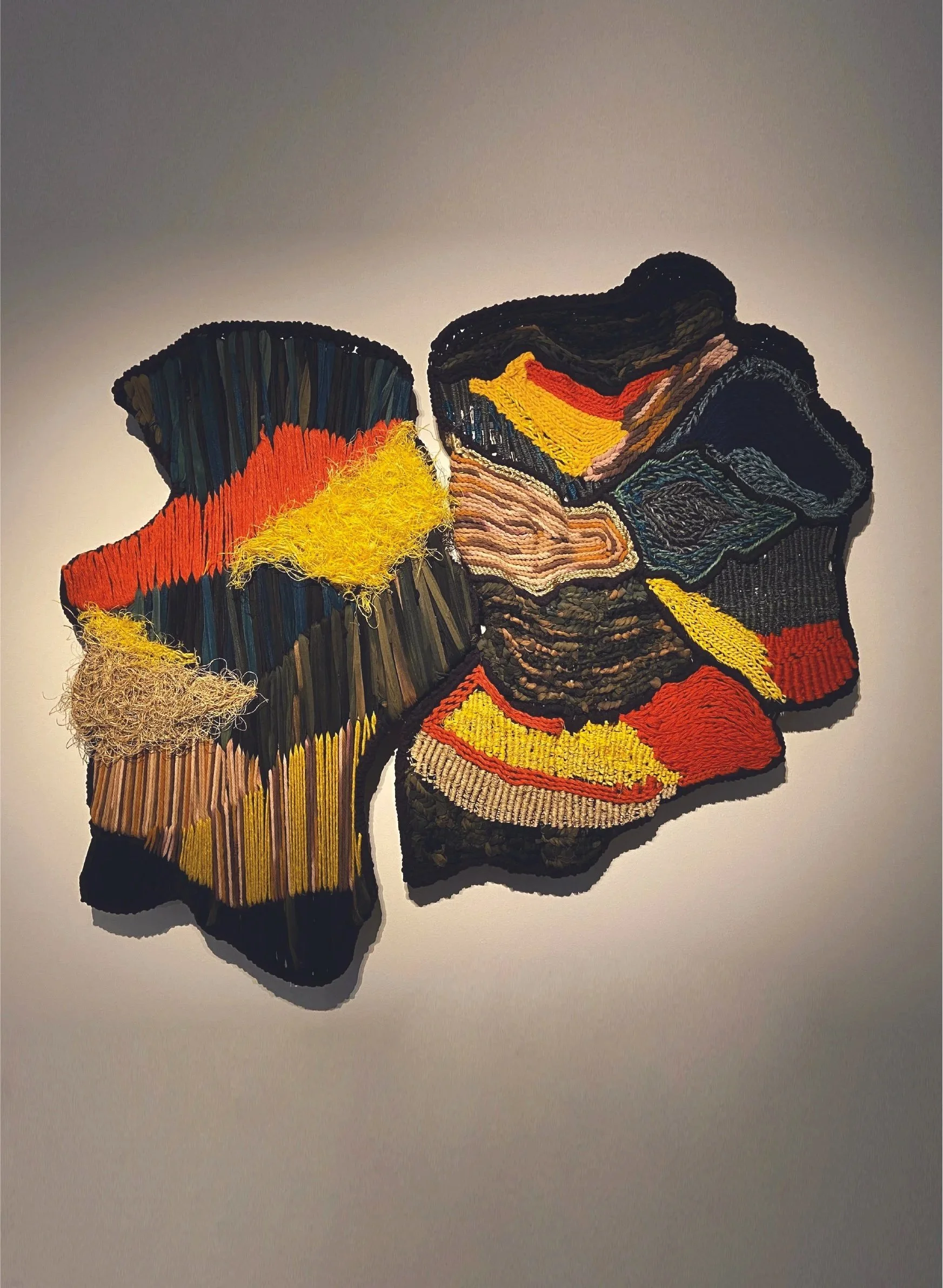
Replication is an exploration of duality and adaptation, re acting Mook's experiences in with commercial art and design. From a distance, the piece appears uniform, yet closer inspection reveals a dichotomy of techniques: one side woven, the other intricately embroidered. This deliberate contrast embodies the tension between creative vision and client expectations.
Inspired by the necessity of adapting her work to meet client briefs, Mook portrays the artist's journey of compromise and craftsmanship. One side represents an original, unaltered vision—textured and layered with Mook's signature techniques. In contrast, the other half signifies the modifications made to satisfy external demands, of detail, delivery and budget.
Replication invites viewers to contemplate the artist's role in balancing personal creativity with professional obligations. It underscores the reality that while artistic integrity is paramount, the ability to adapt and refine one's work to fit external expectations is an essential skillset. This piece challenges the viewer to appreciate the complexity and nuance of the artist's craft, revealing the beauty that emerges from the juxtaposition of vision and compromise. Which side is which? The answer lies in the eyes of each beholder.
Mytosis
Technique : Mixed media
Size : W 160 cm x H 125 cm
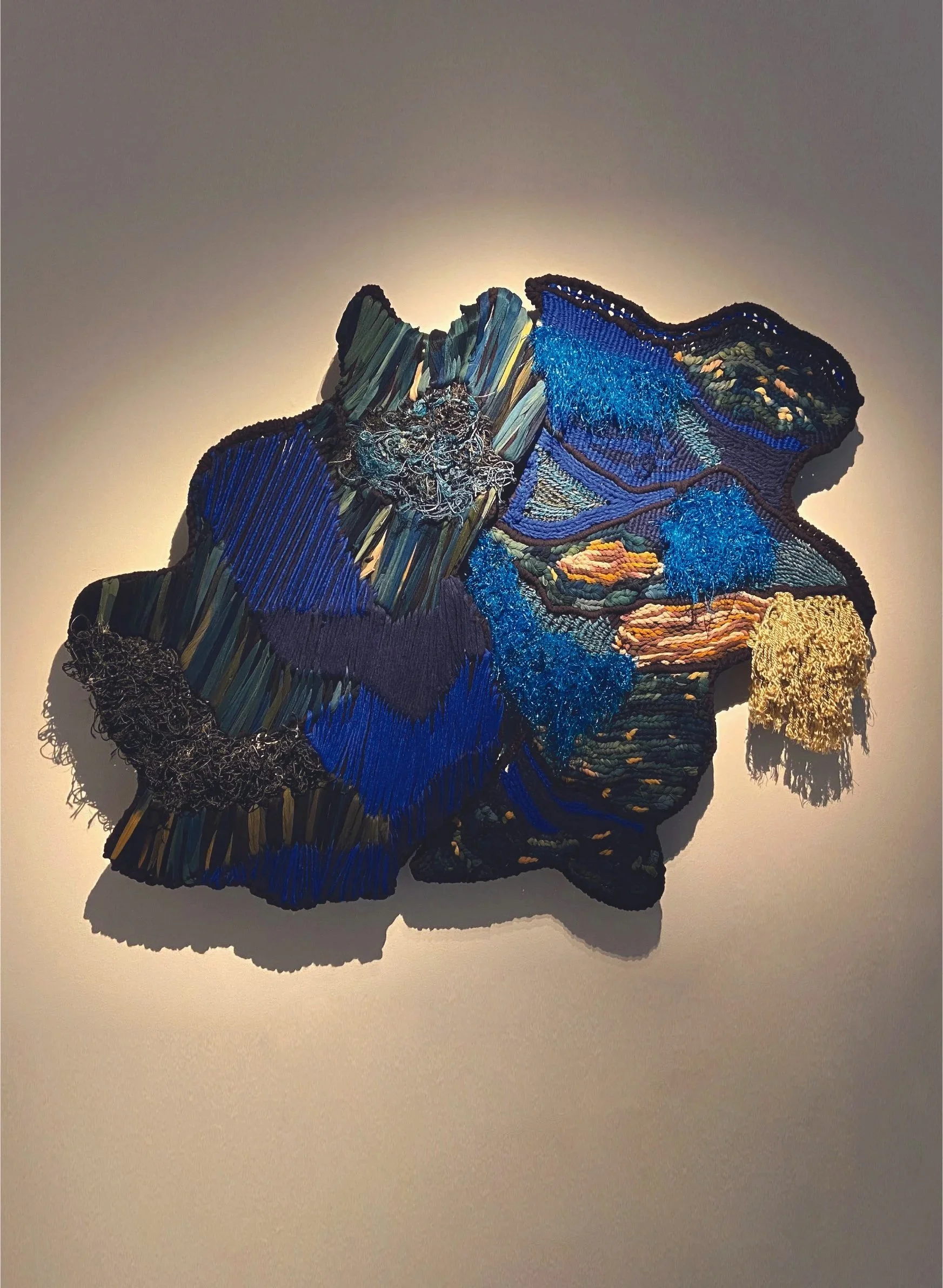
Along with Replication, this artwork captures the dynamic process of artistic adaptation, mirroring the biological concept of mitosis where a single cell divides to form two distinct yet connected entities. At first glance, the piece presents a unified appearance, but closer examination reveals two halves employing different techniques: one predominantly woven and the other dominated by embroidery
Inspired by her commercial work, Mook re acts on the compromises necessary to meet client briefs while maintaining artistic integrity. This work also addresses the challenge of working from briefs that are strikingly similar to previous presentations that ended up in the hands of a competitor willing to produce a cheaper version, an all-too common occurrence in her professional practice. Over time, Mook's track record has resulted in more of her initial vision remaining intact, with clients not only confident in the aesthetic outcome but also satisfied in terms of cost, delivery, and installation.
Mytosis encourages viewers to explore the intricate balance between artistic freedom and professional responsibility. It highlights the duality of the artist's role: creating for oneself while accommodating the desires of others. This piece emphasises that the process of adaptation, though challenging, can result in a harmonious fusion of immense creativity and real-world practicality.
Like Water
Technique : Mixed media
Size : W 240 cm x H 140 cm
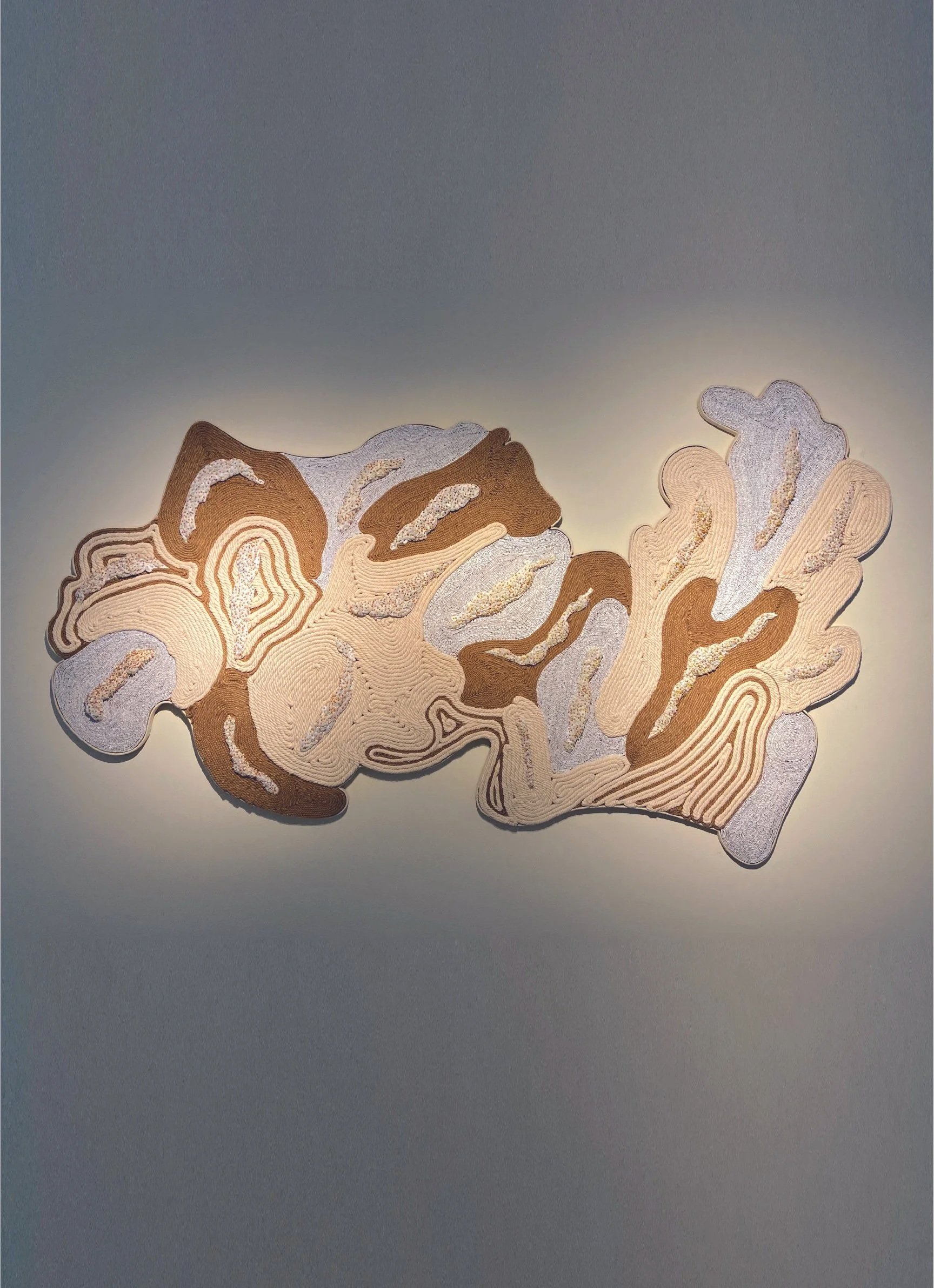
Using a blend of materials and techniques, Mook creates a complex, textured representation of her inner world in Like Water, a soul portrait that embodies her creative mindset as uid, adaptable, and ever-changing. Just as water can ll any form, seamlessly tting into any container, this piece explores the artist's expression of exibility and adaptability
While one’s surface may appear calm and ready, it often conceals a spaghetti-like tangle of emotions and worries beneath. This duality re ects the artist’s introspective journey, questioning her sense of belonging and t within her surroundings. Through this piece, Mook delves into the process of overcoming her fears and cultivating self-belief, inviting viewers to lose themselves momentarily in their own experiences of adaptation. The work encourages nding hidden depths, discovering inner strengths, and summoning the courage to believe in oneself.
Can Do
Technique : Mixed media
Size : W 220 cm x H 150 cm
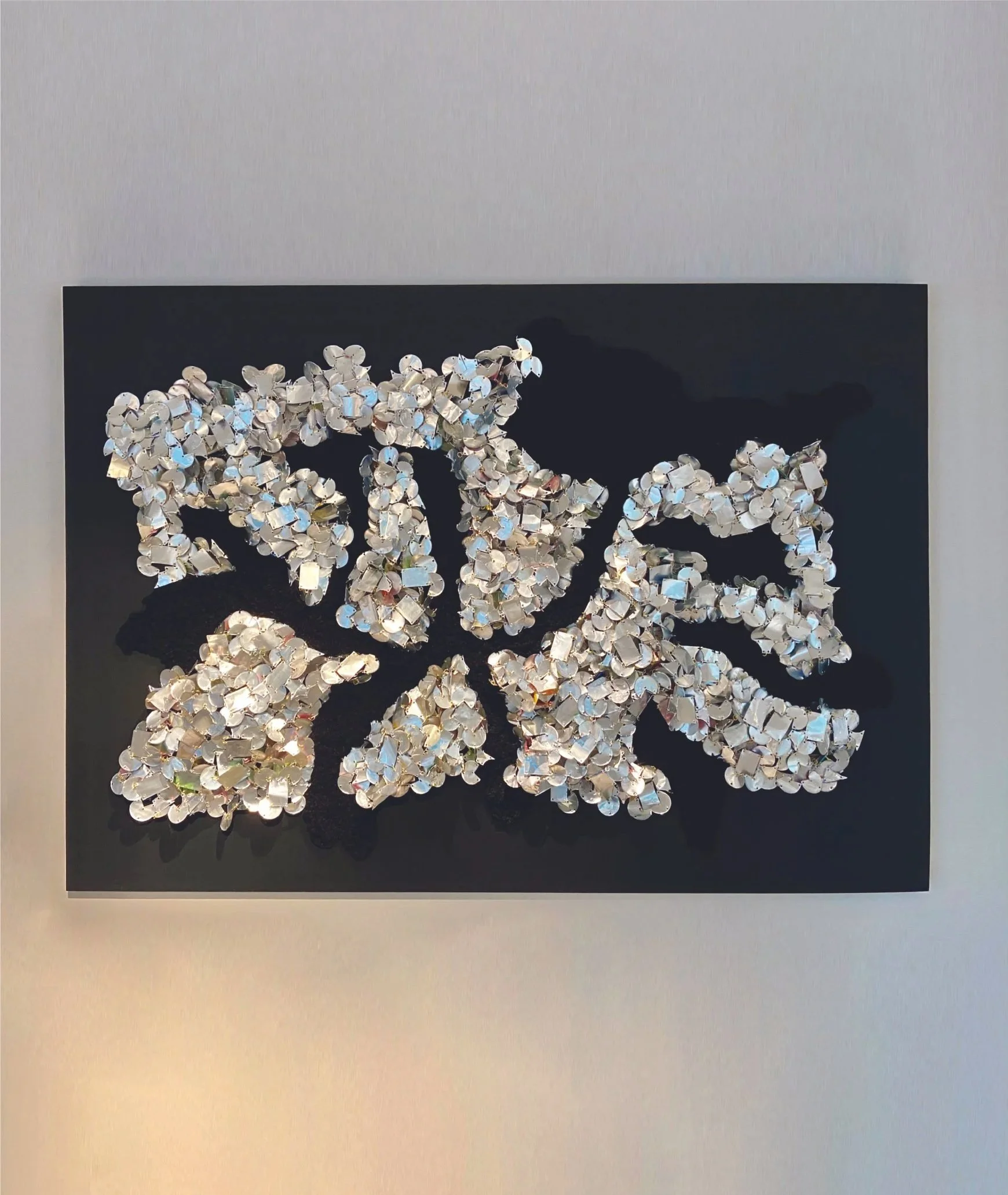
Constructed from recycled aluminium cans and crochet waste yarn, Can Do draws inspiration from the aerial view of a flooding landscape. This artwork re acts Mook's commitment to repurposing discarded materials, transforming them into a visual narrative on the impact of climate change, a theme explored in Mook’s previous solo exhibition The Sea Ghost and Beyond. The chaotic beauty of nature in turmoil is captured through the re active, fragmented surface of murky water, with crochet yarn adding texture and depth. The juxtaposition of these materials highlights the tension between natural disasters and human waste, prompting viewers to contemplate the environmental consequences of consumption and to find beauty in the overlooked and discarded.
Viewers are encouraged to consider their role in our environmental future, re acting on their own environmental footprint and the potential for creative reuse. The piece serves as a reminder of the power of transformation, urging a shift in perspective towards sustainability and responsible consumption. The title, Can Do, a popular pidgin phrase in Thailand, underscores a proactive approach to environmental challenges, suggesting that even misfit materials can contribute to meaningful dialogue on issues affecting everyone on our planet.
Ugly Duckling
Technique : Mixed media
Size : W 130 cm x H 120 cm
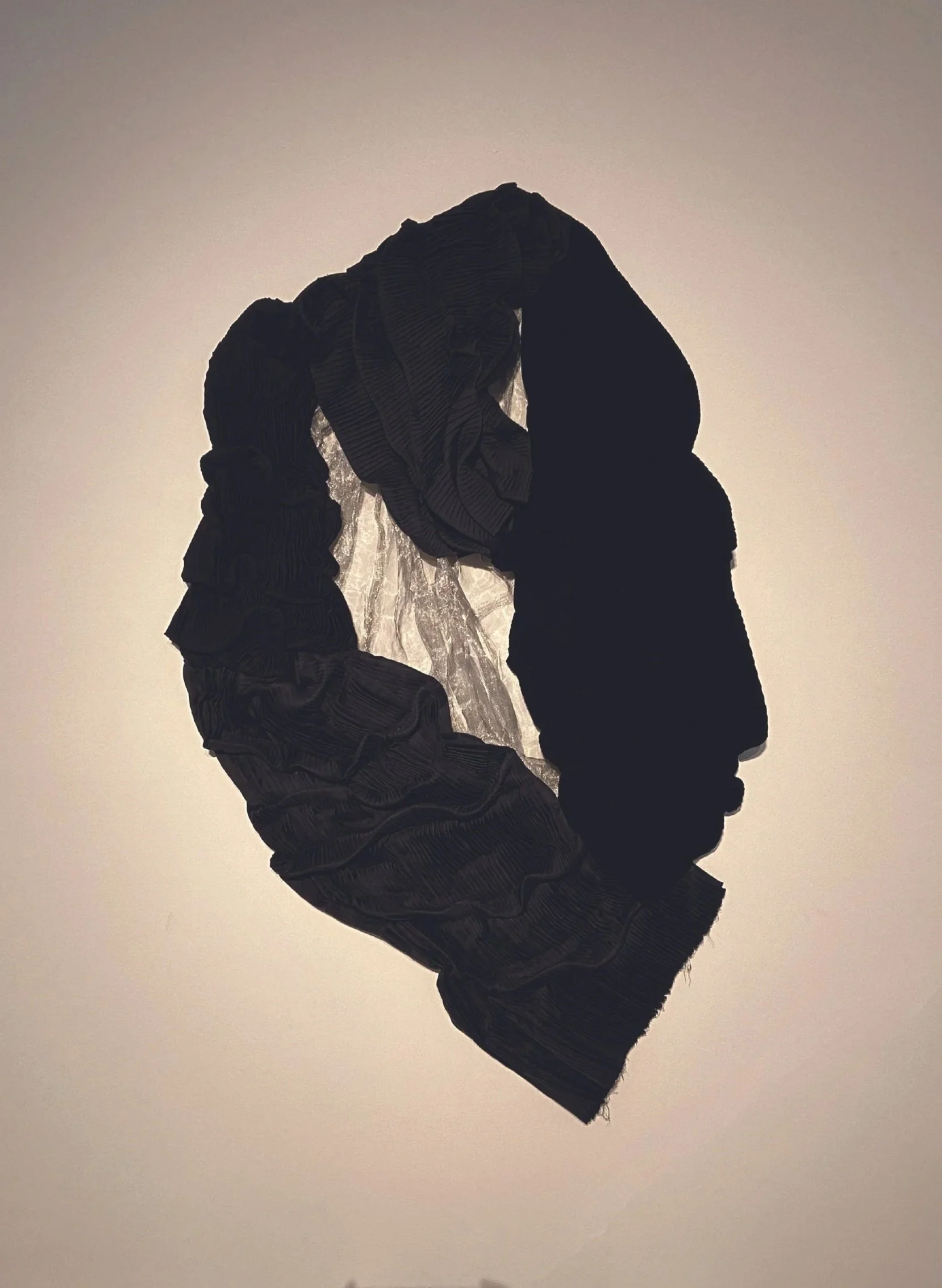
Ugly Duckling refl ects Mook's early adolescence, symbolised by the restrictive school uniform—a pleated skirt and stiff , synthetic white collared shirt. This uniform, intended to foster unity, instead underscored feelings of conformity and unattainable beauty standards.
Struggling academically, even in subjects she loved including art, Mook felt misaligned with the traditional educational system in Thailand. This sense of inadequacy and alienation prompted her decision to study abroad at 13, seeking an environment better suited to her creative spirit.
In this work, Mook captures the tension between imposed identity and personal authenticity. The pleated fabrics in varied shades of black struggle against conformity, juxtaposed with a metallic screen symbolising societal constraints. Through Ugly Duckling, Mook challenges the archaic structures that sought to pigeonhole her, asserting her individuality and creative defiance.
Self Reflection
Technique : Mixed media
Size : W 130 cm x H 120 cm
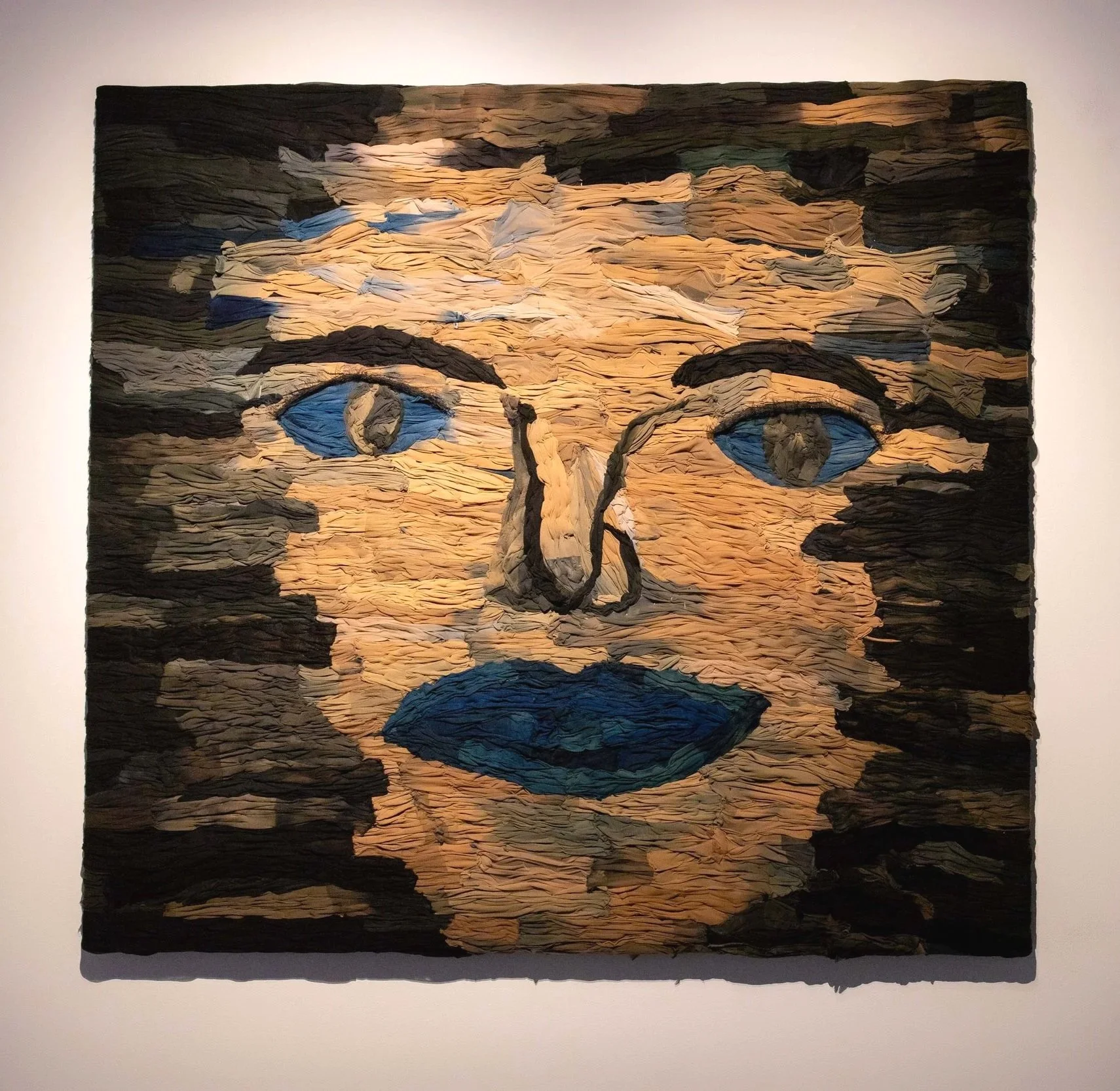
Self Re ection is a textile portrait of the artist gazing into rippling waters, capturing a moment of introspection and self-discovery. Crafted from hand-dyed laddered stockings, sourced from Mook’s closet as well as donations from nurses, this piece intertwines personal history and sustainable living.
The intricate layering and delicate textures of the stockings speak to the complexities of identity and the fragmented nature of self-perception. Each stocking, with its unique imperfections, contributes to a collective narrative of resilience and connection, re acting the diverse experiences that shape our sense of self.
Through Self Re ection, Mook invites viewers to contemplate their own journeys of self-examination, encouraging a deeper understanding of the multifaceted layers that constitute our identities. This work emphasises the freedom to determine our own ways of being and doing, despite societal expectations.
Rippling Veil
Technique : Mixed media
Size : W 130 cm x H 280 cm
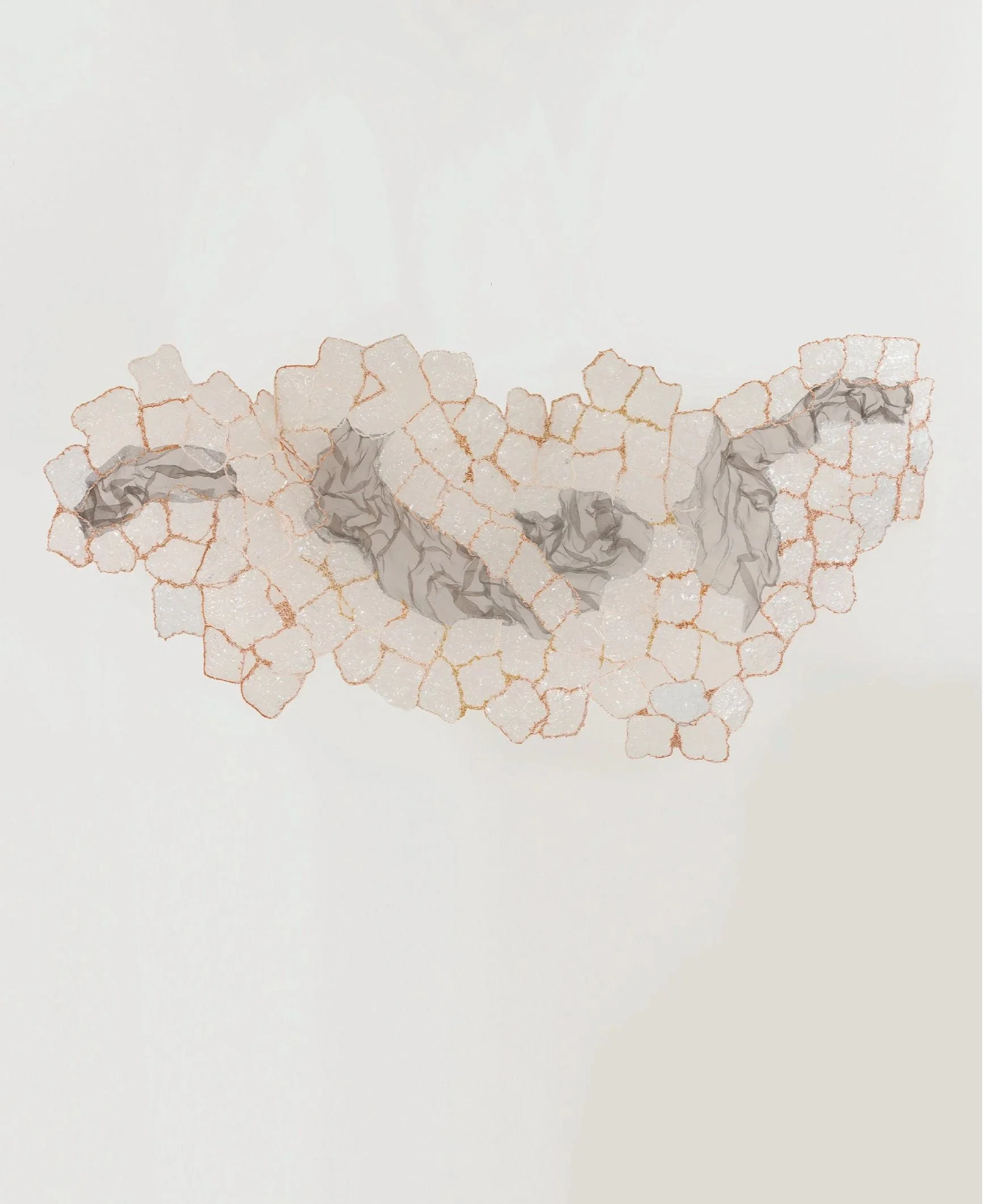
This study for *Rippling Veil* serves as a compelling exploration of the delicate relationship between light and shadow within Ploenchan Vinyaratn’s textile art. The large 6 x 10 meter “Rippling Veil” installation was suspended at a height of 4 meters above the main hall of MOCA Bangkok where its full grandeur can be appreciated, naturally concealed some of the subtleties inherent in its construction. This smaller-scale version allows viewers an intimate glimpse into the complex weaving techniques employed in the final installation. However, this study, positioned at eye level, invites observers to engage closely with the materiality and craftsmanship that define the work.
Goldeneyes
Technique : Mixed media
Size : W 130 cm x H 150 cm
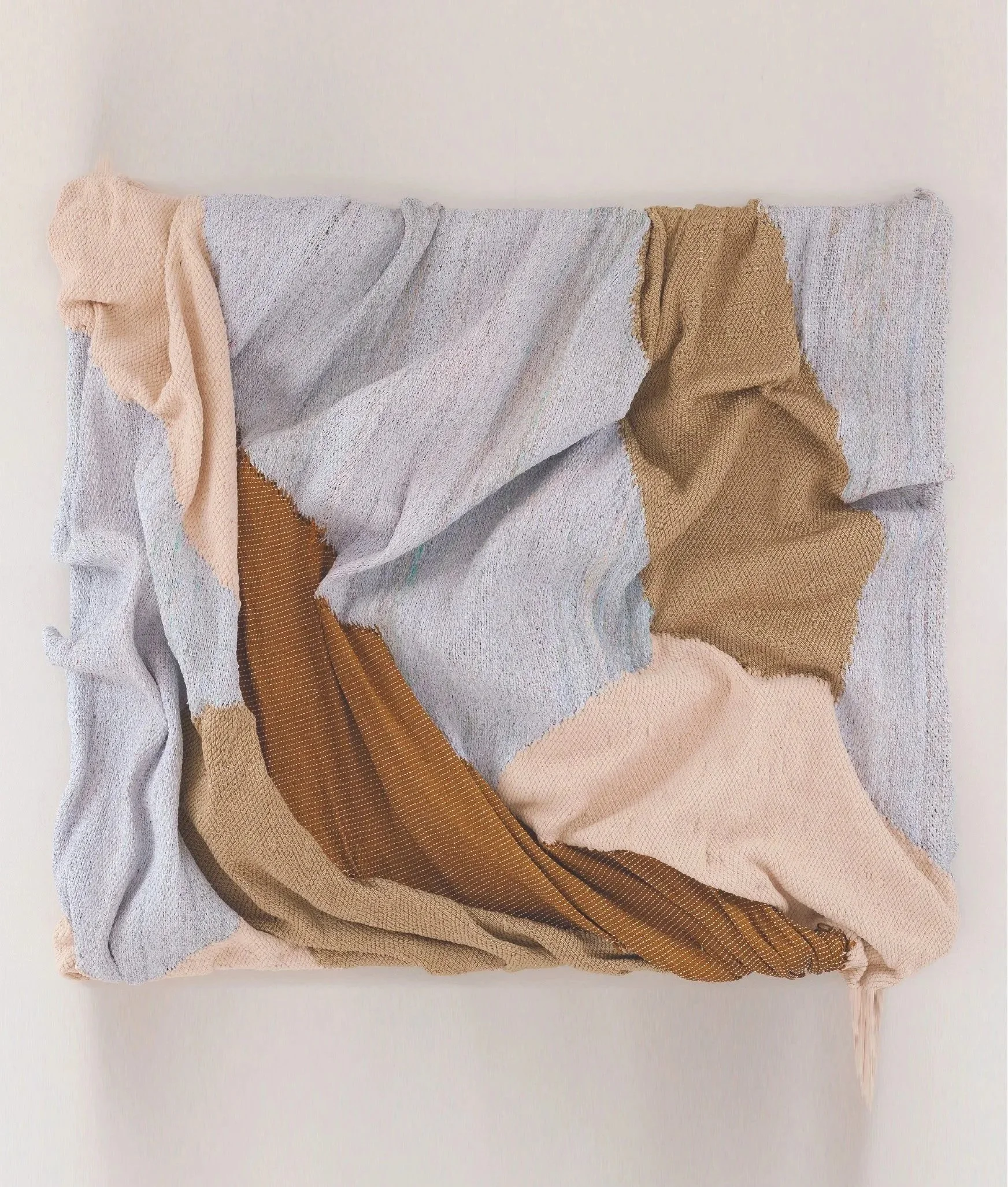
The duality of persistence and fragility drove the creation of goldeneyes, named to echo materials which, when uttered, evokes the meeting of prized resilience and ductility with an immensity of impermanence. Partially hidden in the woven cliff side, a miniature figure, subtly twisted to seemingly emerge from the woven golden wire, ascends as the artist’s journey through her own creative terrain. The interplay of luminous thread and woven recycled paper invites re flection on the narratives of ascent and materiality, sustainability and displacement.
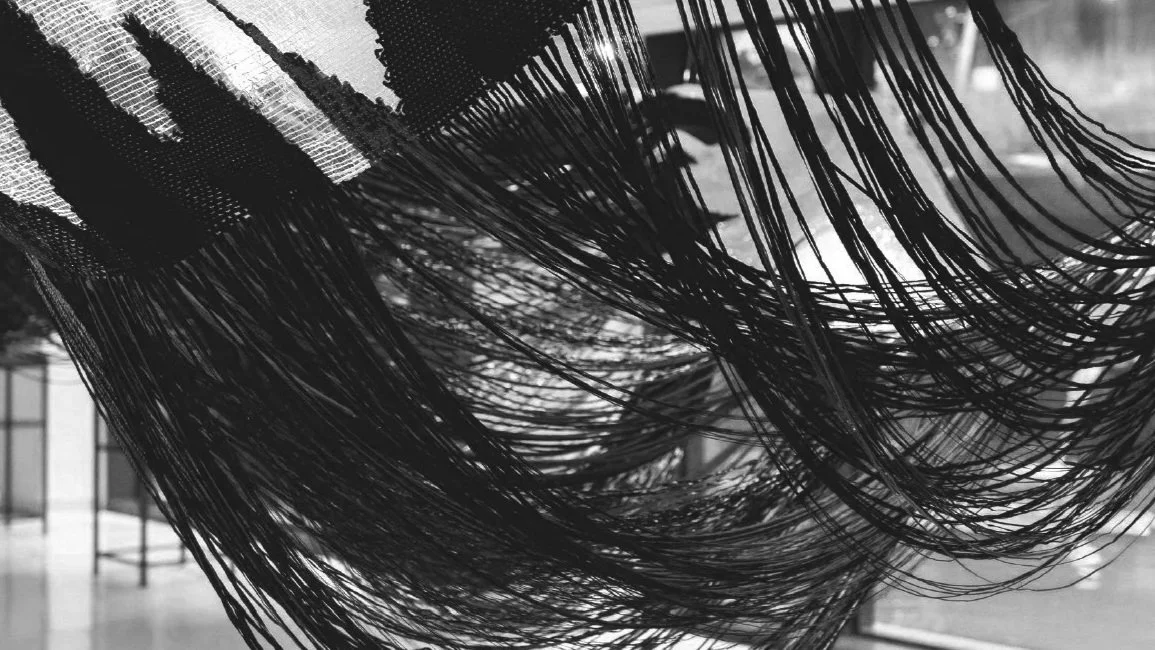
Misfit
Technique : Mixed media
Size : W 400 cm x L 800 cm
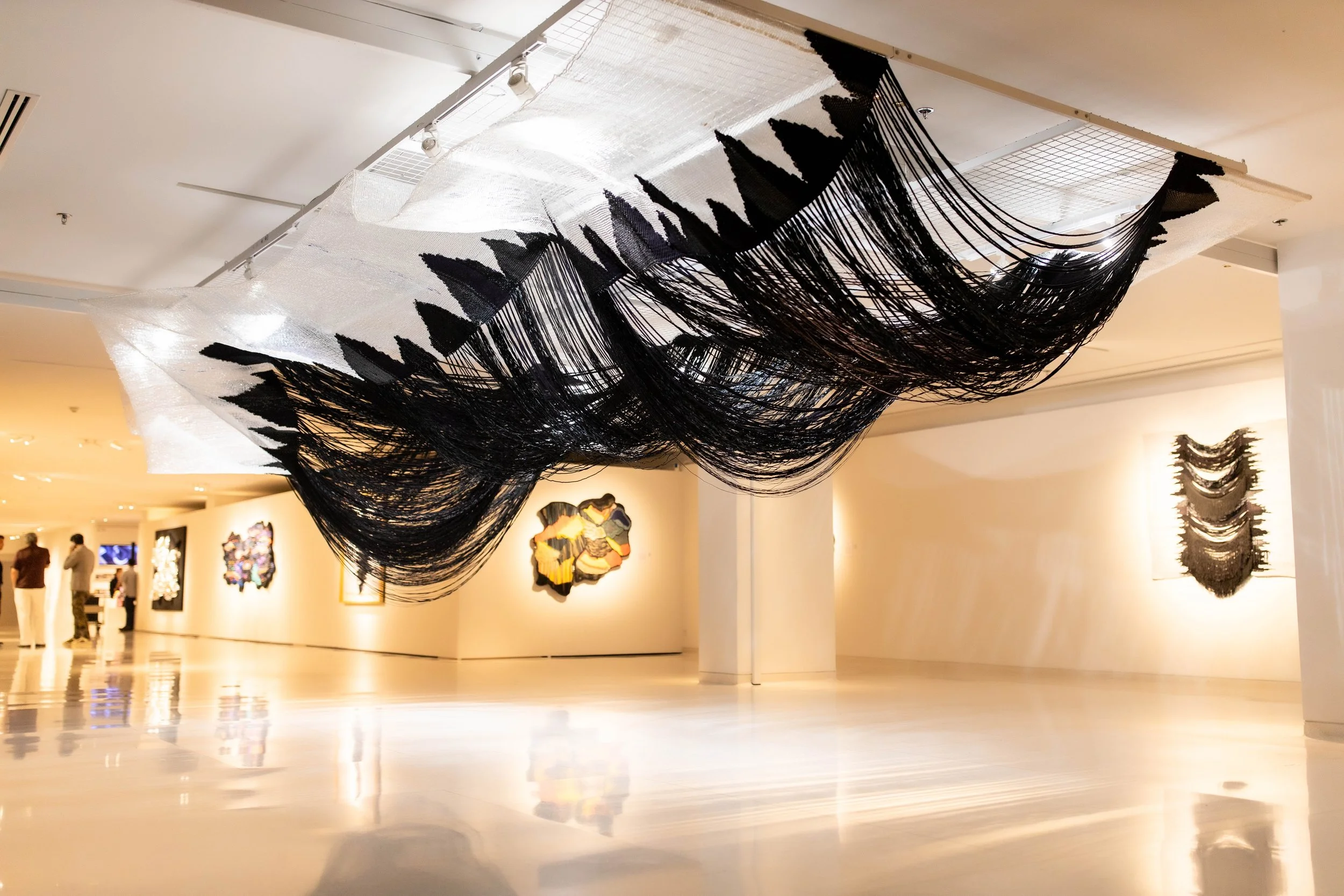
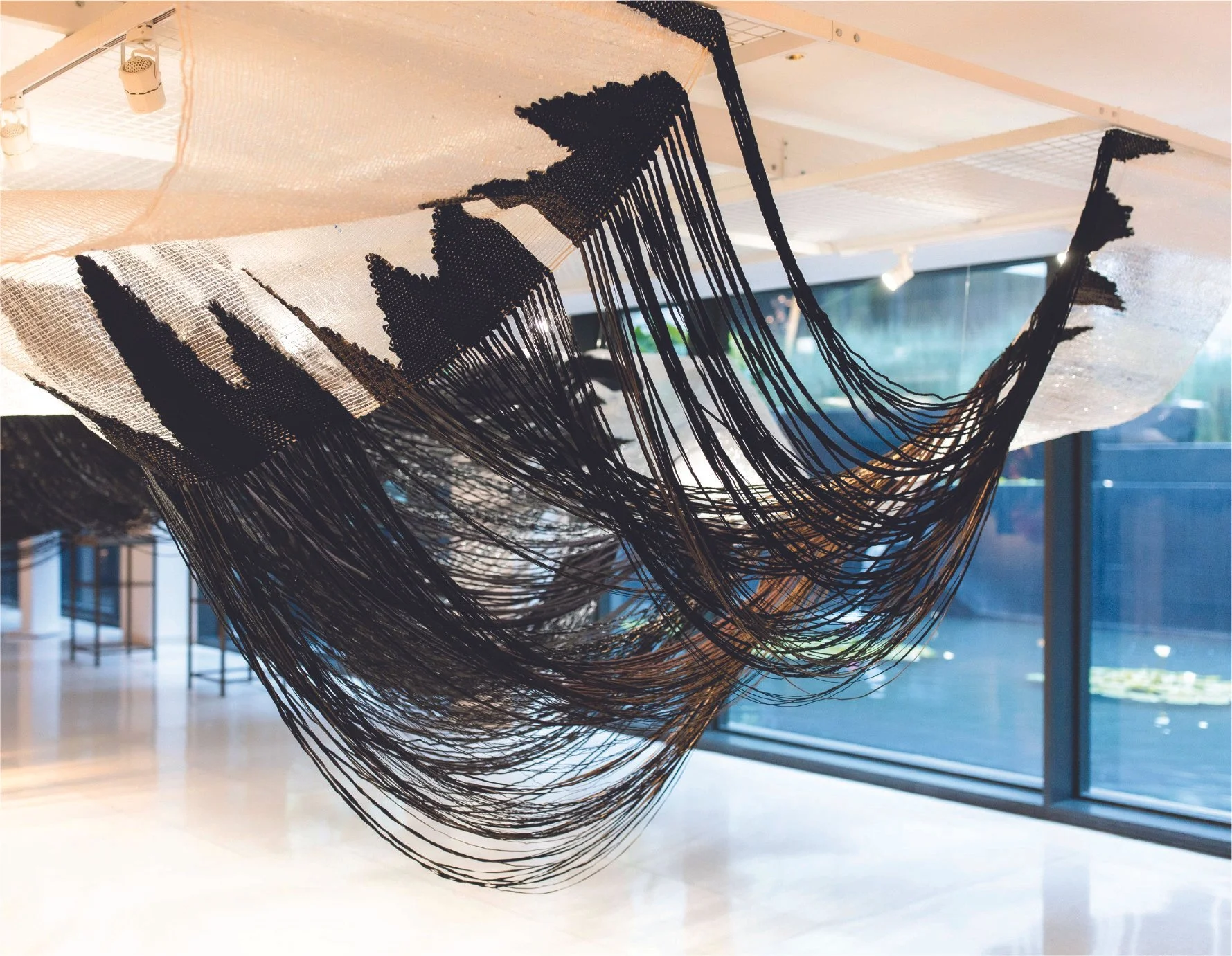
Misfit stands as the centrepiece of this collection, a monumental ceiling artwork created from plastic bottles and recycled yarn. This ambitious installation exemplifies Mook's artistic evolution, as she has elevated her woven textile work from fl oors to wall art and then up to the ceiling. Each plastic bottle has been meticulously hand-cut into ribbons, woven together to form a striking expression of handcraft technique and sustainability.
The re flective shimmer of the plastic, juxtaposed with the dark matter dangling in between, creates an evocative interplay of light, shadow, movement and texture engaging the viewer in a constantly shifting visual dialogue and into a realm where unexpected beauty emerges from dis-carded materials, challenging traditional perceptions of worth and waste. Misfit celebrates the transformative power of creativity and the resilience found in the unconventional.
Regarding the artwork in person reveals a depth and dynamism that cannot be fully captured in photographs, as the interplay of light, shadow, and texture engages the viewer in a constantly shifting visual dialogue. It embodies Mook's visionary approach to combining disparate techniques and materials with consciousness of environment both in the global and local sense, resulting in a captivating and thought-provoking installation.
Through Misfit, Mook challenges us to reconsider our relationship with everyday objects and waste, urging a deeper exploration of sustainability and artistic possibility. The title itself refl ects the spirit of innovation and daring inherent in Mook's approach, where misfit materials find new purpose and meaning in an installation that transcends traditional boundaries.
Rippling Veil
Technique : Mixed media
Size : W 600 cm x L 1000 cm
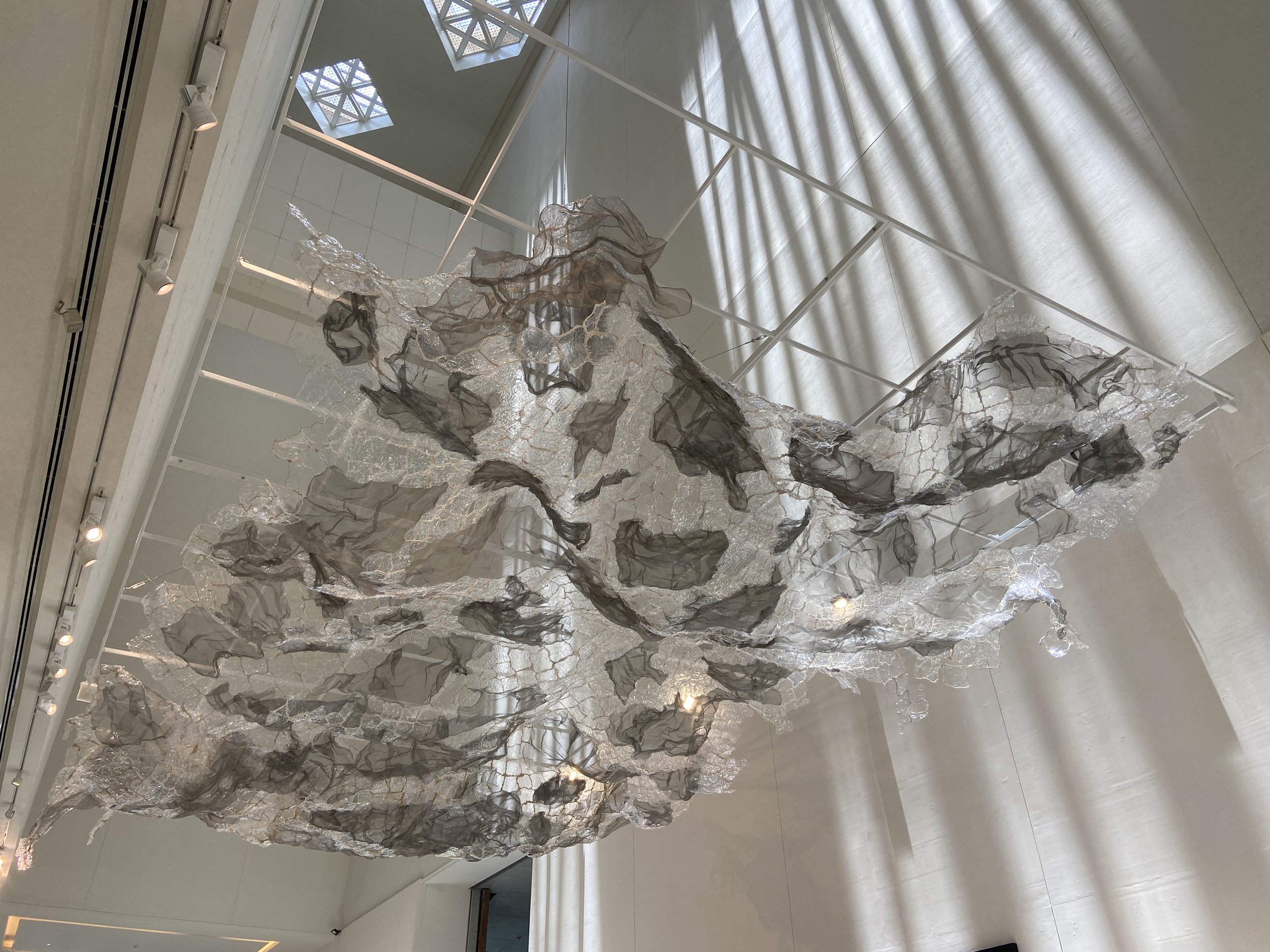
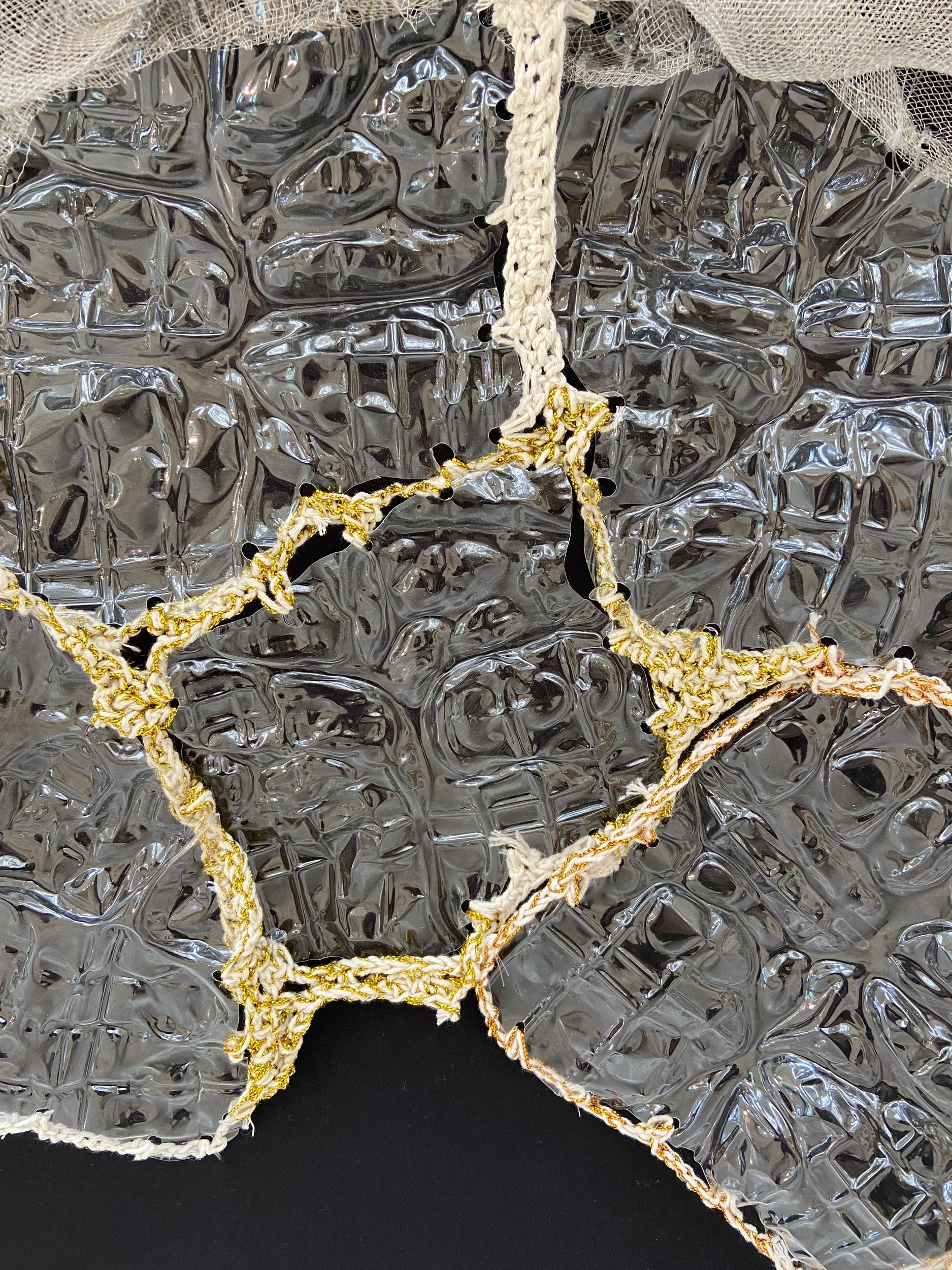
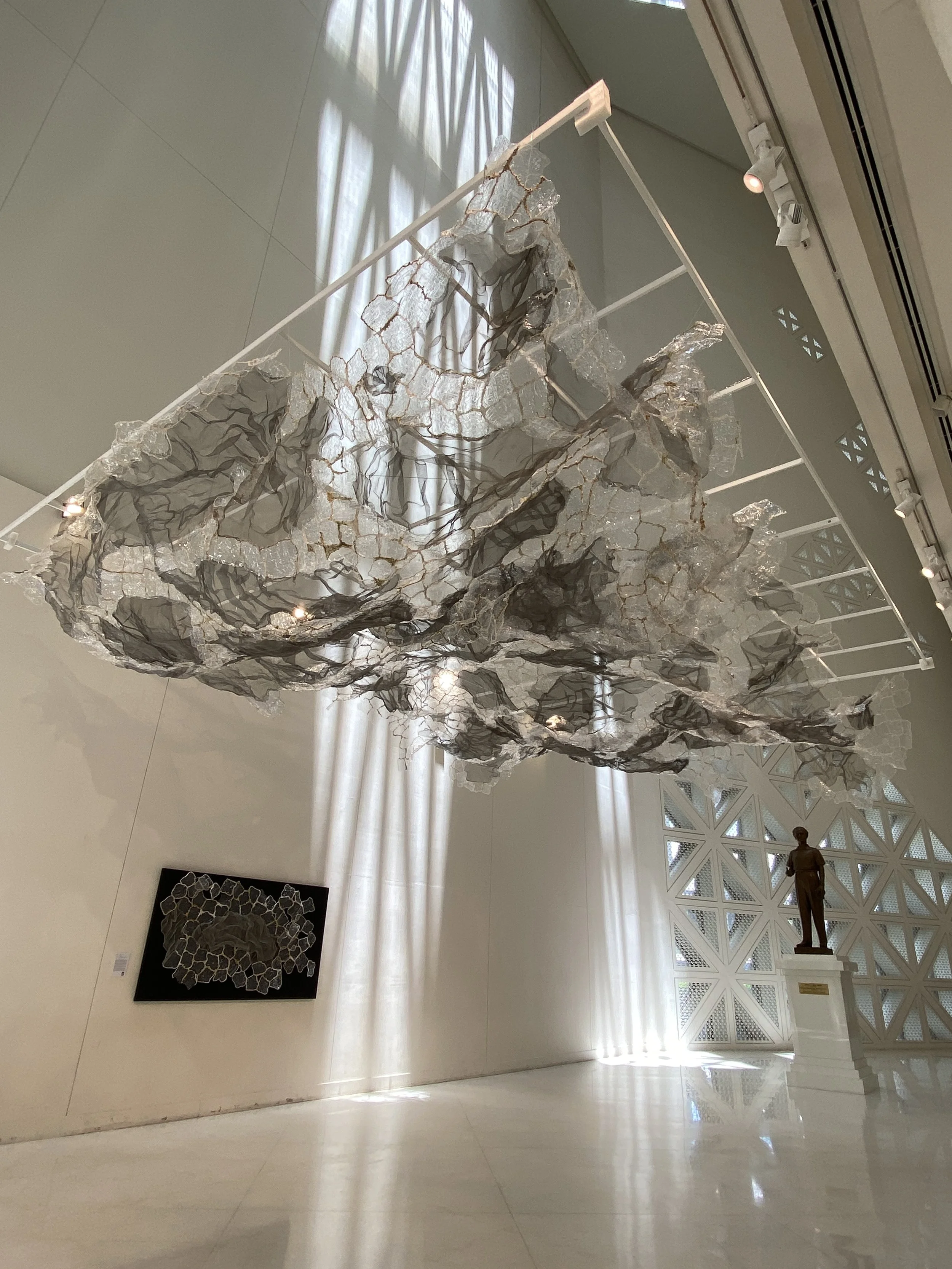
Ploenchan Vinyaratn's "Rippling Veil" invites viewers to step into an ethereal underwater world, where the boundaries between air and water blur into a mesmerizing dance of light and texture. This large mixed-media textile installation, crafted entirely from upcycled materials, immerses the audience in a unique visual experience reminiscent of looking up to the water's surface from below.
Suspended above the viewer, this intricate mosaic of shimmering plastic, leftover yarns, and recycled mesh screens creates a dynamic, ever-changing canopy. The interplay of light through the various textures casts rippling patterns across the space, simulating the dappled sunlight that filters through water. The dark mesh evokes smoke and exhaust, adding a layer of complexity as it undulates and moves within an atmosphere physically in fluenced by the viewers themselves.
The act of looking up to discern the mystery of the materials and craftsmanship places the viewer's body in a childlike pose of wonder. We look up to something greater than ourselves, evoking feelings of exaltation reminiscent of gazing at phantasmagoric clouds or spectacular reworks, or the skyscrapers and grown ups that tower over us.
"Rippling Veil" is not just a visual spectacle; it is a statement on sustainability and the beauty that can emerge from reimagining discarded materials. The use of upcycled elements underscores the importance of environmental consciousness, transforming waste into a wanted form. This installation encourages viewers to refl ect on our relationship with the natural environment and the impact of human activity on our planet's waters. The thin translucence of a veil, traditionally meant to hide something (or someone, like a bride) from malevolent misfit spirits, prompts us to consider how nature's greatest antagonist may be we ourselves.